Amps to Watts Calculator
Quickly convert electric current (amps) to power (watts) using this simple calculator. Supports single-phase and three-phase AC/DC systems with customizable voltage inputs.
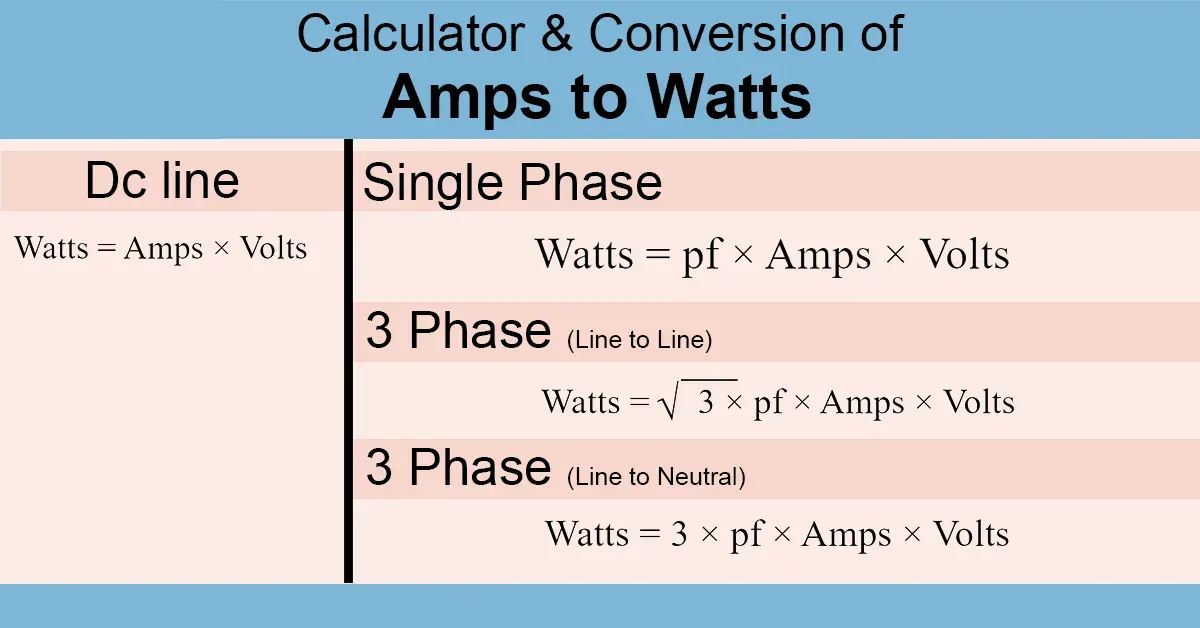
Quick Intro: Convert Amps to Watts
To convert amps to watts, multiply the current (in amperes) by the voltage (in volts). In AC systems, the calculation may include a power factor and phase type. This amps to watts calculator instantly provides accurate power output values for DC, single-phase AC, and three-phase AC circuits, helping you design and troubleshoot electrical systems with confidence.
Formula for Watts calculation
- DC Circuit: Watts = Amps × Volts
- AC Single-Phase: Watts = Amps × Volts × Power Factor
- AC Three-Phase: Watts = √3 × Amps × Volts × Power Factor
The Amps to Watts Calculator is a user-friendly tool designed to help students, engineers, and electricians convert current (in amperes) to power (in watts). Whether you're working with single-phase, three-phase, or DC circuits, the calculator provides quick and accurate results based on the entered voltage and current. For single-phase systems, the formula used is Watts = Amps × Volts. In three-phase circuits, the calculation varies slightly and includes a square root of 3 multiplier and power factor if needed. This calculator is essential for sizing electrical loads, understanding energy consumption, and planning circuits effectively. It's optimized for both beginners and professionals.
Sample Amps to Watts conversion table
| Type | Amps (A) | Volts (V) | PF | Watts (W) |
|---|---|---|---|---|
| DC | 10 | 12 | — | 120 |
| AC Single-Phase | 5 | 230 | 0.9 | 1035 |
| AC 3-Phase | 15 | 400 | 0.8 | 8311.17 |


