Creators
Rojony Khatun Author
Rojony Khatun
CalculatorToolsProjectExpert
Reviewers
Małgorzata Koperska, MD Steven Wooding
Last updated: January 14, 2026

Multi-Volt Transformerless Power Supply Circuit Diagram

🇺🇸
English
Default
🇪🇸
Español
Spanish
🇫🇷
Français
French
🇩🇪
Deutsch
German
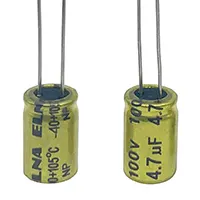
4.7µF 100V Capacitor

4.7µF 100V Capacitor

A polarized electrolytic capacitor rated at 4.7 microfarads with a voltage capacity of 100 volts, used for smoothing, coupling, and decoupling in electronic circuits.

0.1µF 400V Capacitor

0.1µF 400V Capacitor

A non-polarized film/ceramic capacitor with 0.1 microfarad capacitance and 400V voltage rating

1N4007 Diode

1N4007 Diode

General-purpose 1000V, 1A diode

11V Zener Diode

12V Zener Diode

Voltage-regulating diode, 12V clamp

9V Zener Diode

9V Zener Diode

Voltage-regulating diode, 9V clamp

6V Zener Diode

6V Zener Diode

Voltage-regulating diode, 6V clamp

3V Zener Diode

3V Zener Diode

Voltage-regulating diode, 3V clamp

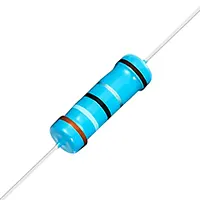
2.9R Fixed Resistor 2W

2.9R Fixed Resistor 2W

A 2.9-ohm resistor rated for 2 watts

22R Fixed Resistor 2W

22R Fixed Resistor 2W

A 22-ohm resistor rated for 2 watts

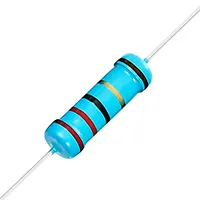
560K Fixed Resistor 1/4W

560K Fixed Resistor 1/4W

A 560,000-ohm resistor rated for 0.25 watts

[560k-fixed-resistor-1/4w]

*Please note: These are affiliate links. I may make a commission if you buy the components through these links. I would appreciate your support in this way!

Multi-volt Transformerless Power Supply Circuit

Design a compact transformerless power supply circuit to get multiple DC voltages. Ideal for hobby electronics, small projects, and low-current applications.

transformerless power supply circuit

A multi-volt power supply is a transformerless power supply that converts AC mains into multiple DC voltages based on an active dropper, a rectifier, and zener diodes. It is small, economical, and suited to low current electronics.

diy electronics projects​

A dimmer circuit for a 220V AC fan is a simple and effective way to change the speed of ceiling or table fans in your home. You can change the firing angle of the AC voltage to change the fan speed smoothly with a TRIAC and DIAC triggering circuit. This saves energy, makes the fan last longer, and lets users choose how comfortable the airflow is. The circuit is small, easy to put together, and great for people who like to build their own electronics. This guide will show you how to build a reliable fan dimmer circuit by going over the parts you need, the circuit diagram, how it works, how to put it together, and safety tips. You can control the speed of a 220V AC fan smoothly without damaging the appliance or putting yourself at risk of electric shock if you follow the instructions carefully.

Features of the 220V Fan Dimmer Circuit

Smooth Fan Speed Control

  • Gradual adjustment from low to high speed.
  • Minimizes flicker or jerky fan movement.

Energy Saving and Efficiency

  • Reduces power consumption at lower speeds.
  • Extends fan motor life.

Compact and Easy to Build

  • Small PCB design.
  • Low component count, ideal for DIY projects.

Components Required

TRIAC (e.g., BTA16, BT136)

  • Acts as a switch to control the AC load.
  • Requires proper heat sinking for safe operation.

DIAC (e.g., DB3)

  • Provides triggering pulse for TRIAC.
  • Ensures smooth conduction and reduces voltage spikes.

Potentiometer (AC Rated)

  • Adjusts phase angle, controlling the fan speed.
  • Typically 500Ω to 1kΩ, AC-rated.

Resistors and Capacitors

  • Resistor-capacitor (RC) network sets TRIAC triggering delay.
  • Ensures smooth fan speed transition.

Heat Sink

  • Dissipates heat generated by TRIAC during conduction.

Working Principle

Phase Control Using TRIAC and DIAC

  • TRIAC acts as a bidirectional AC switch.
  • DIAC triggers the TRIAC once the capacitor voltage reaches its breakover point.

Triggering Circuit for Adjustable Firing Angle

  • Potentiometer and RC network adjust the charge time of the capacitor.
  • Faster or slower charging changes the TRIAC firing angle.

Voltage and Speed Control of AC Fan

  • TRIAC switches the AC voltage to the fan motor at different points in the cycle.
  • Effective AC voltage varies, controlling fan speed.

Circuit Diagram and Assembly Steps

AC Input Connections

  • Connect live and neutral lines from the mains supply to the circuit input.
  • Ensure proper insulation and fuse protection.

AC Input Connections

  • Connect live and neutral lines from the mains supply to the circuit input.
  • Ensure proper insulation and fuse protection.

TRIAC and DIAC Trigger Circuit

  • Connect the DIAC in series with the capacitor and potentiometer to the TRIAC gate.
  • TRIAC MT1 and MT2 terminals connected to the AC fan and mains.

Potentiometer Adjustment

  • Adjust the potentiometer to vary the charging time of the capacitor.
  • Smoothly controls TRIAC conduction angle, adjusting fan speed.

Testing and Fine-Tuning

  • Power ON circuit without a fan to check firing pulses.
  • Connect the fan and adjust the potentiometer gradually.
  • Ensure TRIAC stays within temperature limits.
  • Observe smooth speed control and check for noise or flicker.

Applications

  • Household ceiling or table fans
  • Small AC appliances requiring speed control
  • Energy-saving home automation projects
  • DIY electronics learning projects

Safety Precautions

  • Ensure mains power is OFF during assembly.
  • Use insulated tools and AC-rated components.
  • Keep TRIAC on the heat sink to avoid overheating.
  • Fuse or circuit breaker for protection.
  • Avoid touching live wires while operating.

Troubleshooting and Maintenance

  • Fan not running: Check TRIAC and DIAC connections.
  • Fan running erratically: Inspect RC network and potentiometer.
  • Overheating TRIAC: Add a larger heatsink or reduce the load.
  • No speed variation: Potentiometer may be faulty or incorrectly rated.

Frequently Asked Questions - Multi-volt Transformerless Power Supply Circuit:

What is a transformerless power supply?

A circuit converting AC to DC without using a bulky transformer.

Can it provide multiple voltages?

Yes, by using different zener diodes or voltage regulators.

Is it safe for high-power devices?

No, suitable only for low-current devices.

What is a capacitive dropper?

A capacitor used to reduce AC voltage safely for low-current circuits.

Do I need a fuse?

Yes, for safety against short circuits and overloads.

Can I use it for LEDs?

Yes, ideal for low-current LED circuits.

Is isolation needed?

Yes, proper insulation is critical to avoid electric shock.

How to regulate voltage?

Use zener diodes or voltage regulator ICs.

Is it beginner-friendly?

Yes, but safety precautions with AC are essential.

Applications?

Low-power electronics, sensor modules, LED circuits, hobby projects.

Comments

Please login to comment.

Rojony Khatun

Rojony Khatun

Calculator Tools Project

Rojony Khatun is the creator of a free online tools website designed to simplify everyday and engineering-related calculations for students, professionals, and hobbyists. The platform offers a wide variety of basic and advanced calculators across key categories, including Electrical Calculators, Electronic Calculators, and Time & Date Calculators, helping users solve problems quickly and accurately.