
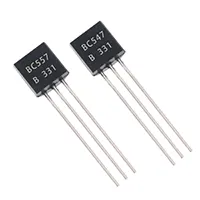



BC557 Transistor Project
Explore BC557 transistor projects for DIY electronics. Build amplifiers, switches, or LED control circuits using this PNP transistor in simple setups.
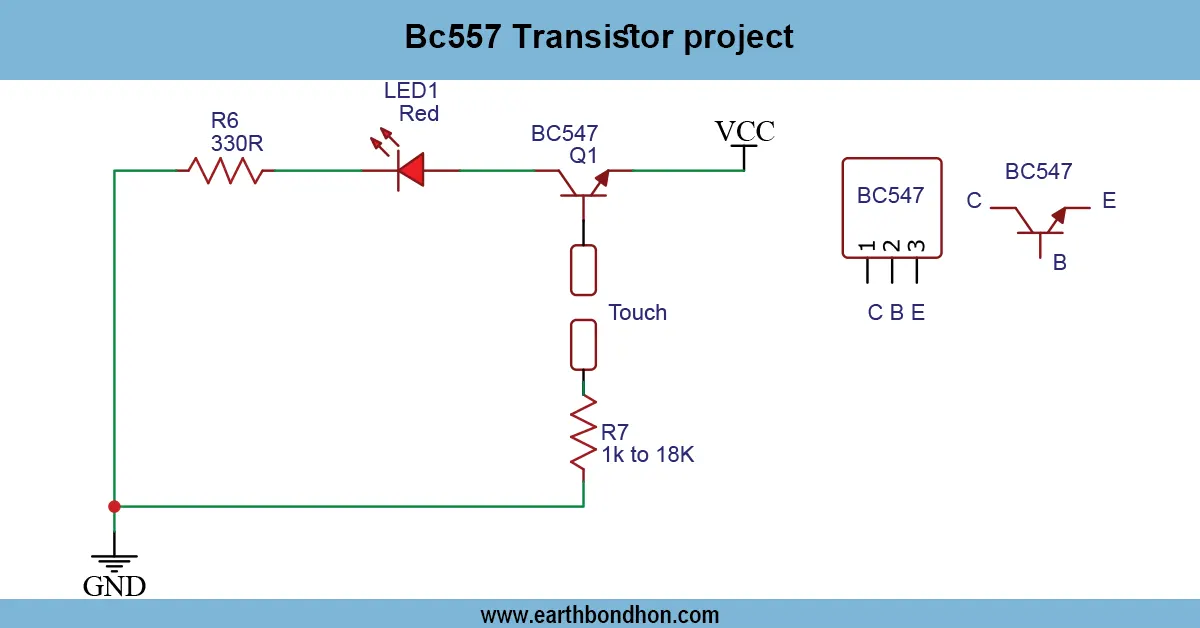
BC557 transistor project
One of the transistor project studies is based on a bc557 with basic switching and amplification. It is a PNP transistor that is capable of operating LEDs or small motors, or it can be used as an amplifier in home-built electronics.
simple BC557 switch circuit
BC557 transistor project is a good project that is suitable to the novices and electronics lovers. BC557 is a PNP type bipolar junction transistor that is utilized in switching and amplification. The circuit consists of only a few components, such as resistors, capacitors, LED, and power supply, which allow you to construct several circuits to learn how it works.
Circuit boards LED switch circuits may be considered one of the most popular BC557 projects, as well as audio amplifier, touch switches, and timer -based circuits. It is safe and simple to experiment with since it can take low -current loads. The application of BC557 in a circuit assists the user to learn more about the principles of biasing, switching and amplifying a current with a transistor. Breadboards or PCBs may be used to assemble a project, and this gives a practical experience of the use of real-world electronic components. These are safe, educational and cost-effective projects, thus BC557 is a great project to be used by students and hobbyists who are learning the basics of electronics.
Work / Installation (Inputs → Outputs)
- Power Supply Input → Typically 5V to 12V DC.
- BC557 Transistor → Acts as a switch or amplifier.
- Input Signal → Controls base current to turn on/off the transistor.
- Output Load → LED, buzzer, or small motor controlled by the transistor.
- Installation → Assemble on breadboard or PCB; ensure correct pin configuration.
Testing & Final Adjustments
Once assembled, verify the connections between the base and emitters and between the emitters and the collector are of proper polarity. Test by giving a small input signal to the base and the load should swing. Measure the voltage across the transistor to make sure that it is biased. Base resistor values can be adjusted to control switching sensitivity. In amplification projects, the input signals are connected to the base and the changes in the output waveforms are observed. It is important to ensure that current through collector does not go beyond the transistor limits to avoid overheating. Test in different conditions to ensure that there is reliable switching or amplification. Permanent projects Place solder components in a PCB after verification. Functional testing is a safety measure, functional testing and educational testing.