How to Make Automatic Cut Off 12V Battery Charger
Learn how to make an automatic cutoff 12V battery charger. Step-by-step DIY guide with circuit diagram, components, working principle, and safety tips.

What is an Automatic Cut Off Battery Charger?
An automatic cut-off battery charger is used to check the voltage in the battery and to cut off the charging circuit once the battery is completely charged. This avoids overcharging, overheating, and damage to batteries.
Benefits:
- Protects battery from overcharging
- Saves electricity
- Reduces maintenance
- Ensures longer battery life
Overcharge protection battery circuit
One DIY electronics project that is a necessity to ensure safety is a 12 V battery charger with an automatic cutoff. Excessive charging of a battery may cut off its life or even ruin it. In this project, the voltage sensing circuit is used to signal when the battery is fully charged,a nd it would automatically switch off the supply of charging.
The project is a DIY, and therefore best suited to hobbyists, students, and electronic enthusiasts. With just a few components, such as a relay, voltage divider, transistor, and LED indicator, you can create a smart 12V battery charger that automatically shuts off the power flow to the battery as soon as it is completely charged.
Here, we discuss the parts, the working principle, the circuit diagram, step-by-step assembly, tips, and safety measures of an automatic cut-off charger, 12 V battery charger, and therefore, you buy it and create a reliable piece of equipment at home.
Applications of Automatic Cut Off 12V Charger
- Charging 12V lead-acid batteries safely
- DIY solar battery charging projects
- Automotive battery charging
- Backup UPS batteries
- Small electronics projects requiring 12V supply
Components Required
| Component | Specification |
|---|---|
| Transformer | 12V AC, 1–2A |
| Bridge Rectifier | 1A or higher |
| Capacitor | 1000µF/25V for smoothing DC |
| Relay | 12V DC, SPDT |
| NPN Transistor | BC547 or 2N2222 |
| Zener Diode | 12V for voltage sensing |
| Resistors | 1kΩ, 10kΩ |
| LED | Charging indicator |
| Fuse | 1–2A for protection |
| Wires & PCB | For assembly |
Working Principle
Voltage Detection
A voltage divider and zener diode detect the battery’s full charge level (around 13.8V). When voltage exceeds the zener threshold, the sensing signal activates the transistor.
Relay Switching Mechanism
The transistor energizes the relay, disconnecting the charger output from the battery once the full charge level is reached.
LED Indicator for Charging Status
The LED glows during charging and turns off when the relay disconnects power.
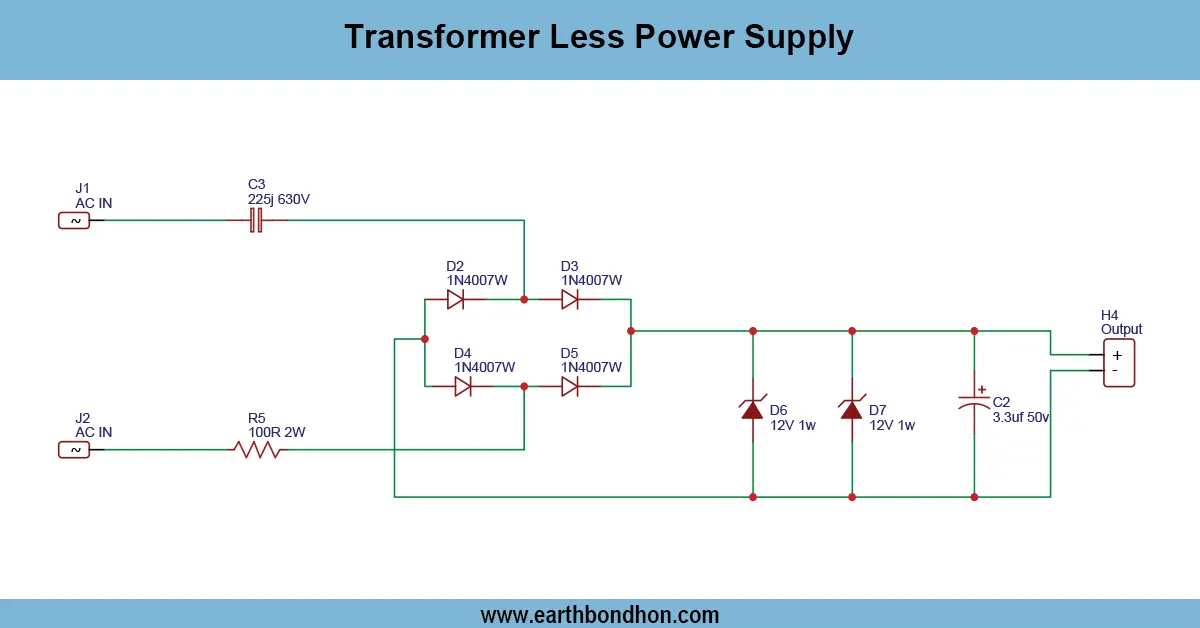
Circuit Diagram of 12V Auto Cut Off Charger
- AC mains to transformer primary
- Transformer secondary to bridge rectifier
- Capacitor smooths rectified DC
- Battery connected to relay output
- Zener-resistor network detects voltage
- Transistor drives relay coil
- LED shows charging status
Step-by-Step Construction Guide
- Connect transformer and rectifier to AC mains.
- Add smoothing capacitor across DC output.
- Build voltage sensing network using zener and resistors.
- Connect transistor to sensing circuit.
- Wire relay between charger and battery.
- Add LED charging indicator.
- Install fuse on transformer secondary.
- Test with multimeter and calibrate cutoff voltage.
Tips for Better Performance
- Use a relay rated for battery current.
- Ensure correct zener value for 12V battery.
- Mount relay and transistor with ventilation.
- Test without battery first.
- Use high-quality fuse and wiring.
Safety Precautions
- Disconnect AC mains before building.
- Use insulated wires and PCB.
- Avoid touching live AC terminals.
- Always use a fuse.
- Ensure proper orientation of components.
Troubleshooting Common Issues
Charger Not Stopping at Full Charge
- Check zener voltage and resistor values
- Verify transistor and relay wiring
Relay Not Switching
- Check transistor biasing
- Ensure relay coil is 12V rated
Battery Not Charging
- Verify rectifier and capacitor
- Check transforsecondary voltagetage