Mercury Vapour Lamp Diagram
Learn mercury vapour lamp wiring to safely connect the lamp, ballast, and ignitor for street or outdoor lighting, ensuring proper operation and safety.
high-intensity discharge lamp wiring
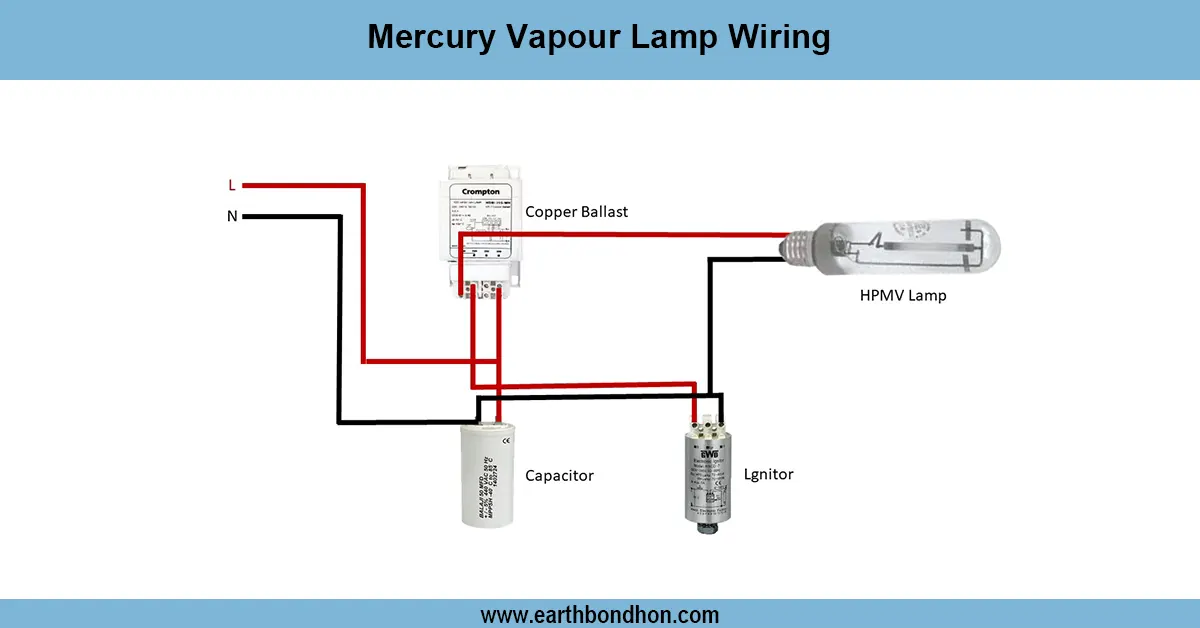
The lamp, ballast, and ignitor are connected to the mains supply with mercury vapour lamp wiring. When the lamp is wired with proper wiring, it will start in the correct way, be safe to use, and it will give efficient light to the outside.
mercury vapour lamp installation
Mercury vapour (MV) lamp wiring provides effective and safe operation of the lamp, ballast and ignitor with good connection between them. The AC mains supply is fed through a switch or MCB, and connected to the ballast input. The lamp and ignitor are connected to the ballast output. The ignitor gives the first burst of high voltage to activate the lamp, and the ballast regulates the current when the lamp is operating normally. The earth and neutral connections should be taken care of. Wiring also ensures that the lamp does not flicker, fail prematurely or pose a risk of electricity. Testing requires turning the supply on and making sure that the lamp lights up and burns properly. The areas of outdoor lighting, street lighting, and industry, are common uses of this wiring. Proper installation guarantees the longevity of the lamp, efficiency in using the mercury vapour lamp, and safe use of the mercury vapour lamp.
Work & Installation (Input → Output Summary)
- ConnectAC mains supply through a switch or MCB to the ballast input.
- Connectballast output to the lamp and ignitorterminals.
- Ensure neutral and earth connections are properly installed.
- Ignitor generates a high-voltage pulse to start the lamp.
- Ballast limits current during normal operation.
- Verify proper mounting and insulation to prevent hazards.
Testing & Final Adjustments
- Verify all wiring: mains, switch/MCB, ballast, lamp, and ignitor.
- Switch ON supply; check lamp ignition and steady operation.
- Inspect neutral and earth connections for safety.
- Ensure no loose or exposed wires.
- Confirm ballast limits current correctly to prevent lamp damage.
- Test multiple ON/OFF cycles to check ignition reliability.
- Verify lamp positioning for optimal illumination.
- Check for flickering or delayed startup; adjust ignitor if necessary.
- Ensure switch/MCB trips under fault conditions.
- Document wiring and installation details for maintenance.