Creators
Rojony Khatun Author
Rojony Khatun
CalculatorToolsProjectExpert
Reviewers
Małgorzata Koperska, MD Steven Wooding
Last updated: January 14, 2026

Regulated Adjustable Power Supply Circuit Using LM317 IC

🇺🇸
English
Default
🇪🇸
Español
Spanish
🇫🇷
Français
French
🇩🇪
Deutsch
German
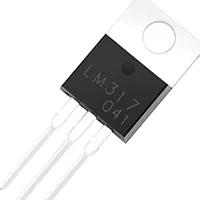
LM317 Voltage Regulator

LM317 Voltage Regulator

Adjustable 3-terminal positive regulator, output 1.25V – 37V, up to 1.5A

10K Fixed Resistor

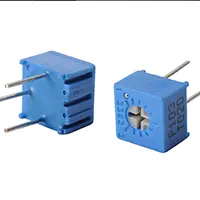
10K Variable Resistor

Adjustable resistor with 10,000 ohm resistance

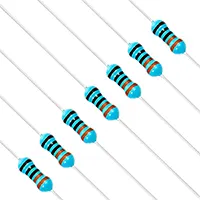
330-ohm Fixed Resistor 1/4W

330R Fixed Resistor 1/4W

A 330-ohm resistor rated for 0.25 watts

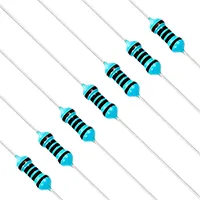
100R Fixed Resistor 1/4W

100R Fixed Resistor 1/4W

A 100-ohm resistor rated for 0.25 watts

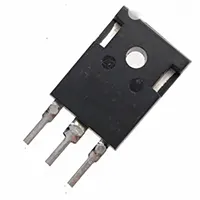
47N60C3 MOSFET

47N60C3 MOSFET

A 650V, 47A N-channel CoolMOS™ power MOSFET designed for high-efficiency applications such as SMPS, PFC circuits, inverters, and UPS systems.

*Please note: These are affiliate links. I may make a commission if you buy the components through these links. I would appreciate your support in this way!

Regulated adjustable Power Supply

Build a regulated adjustable power supply using LM317 IC. Provides stable, adjustable DC voltage for electronics projects, hobby circuits, and testing purposes.
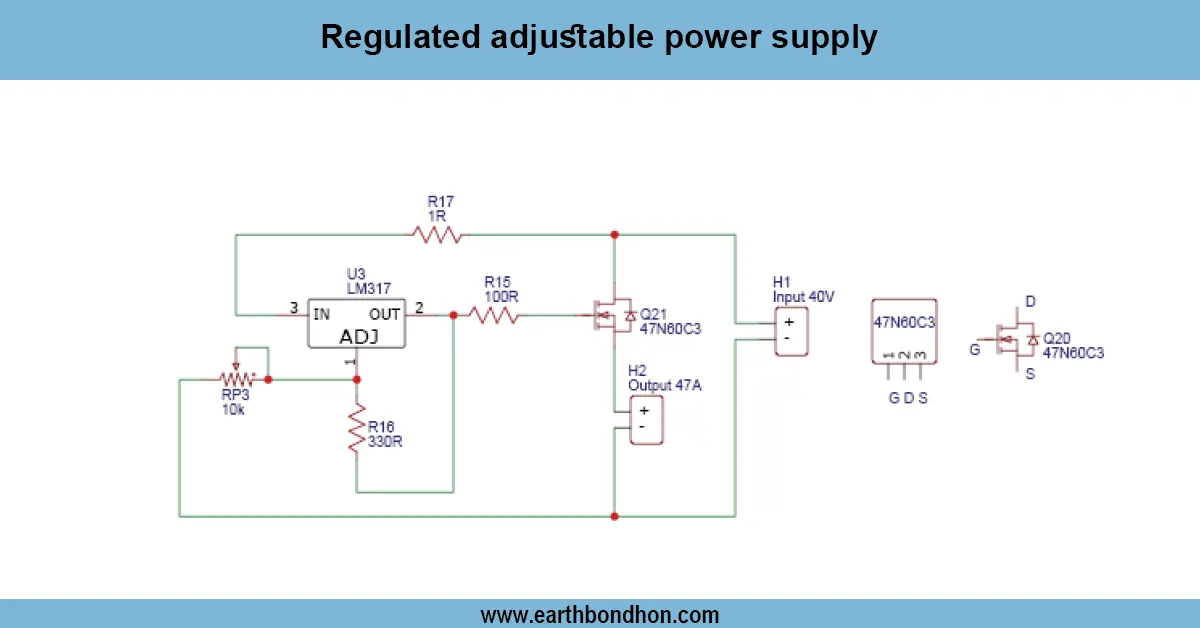
LM317 adjustable power supply

A DC voltage is obtained with an adjustable and controllable supply of power using the LM317. The output voltage to the hobby circuit, testing, and other educational electronics projects may be chosen by adjusting a resistor divider.

star led chaser circuit diagram

A Star Light LED Chaser Circuit is a visually appealing electronic circuit that makes multiple LEDs light up in a sequential “chasing” pattern, similar to stars twinkling or moving along a path. This effect is widely used in decorative lighting, digital displays, or festive decorations. The circuit typically combines an NE555 timer IC configured as an astable oscillator with a 4017 decade counter IC. The NE555 generates clock pulses that drive the 4017 IC, which sequentially turns LEDs on and off. By arranging the LEDs creatively, you can create starry effects, circular chasing patterns, or other eye-catching designs. This guide provides a complete explanation of the Star Light LED Chaser Circuit, including component selection, wiring schematics, step-by-step assembly instructions, power considerations, troubleshooting tips, and safety precautions for DIY hobbyists and electronics enthusiasts.

Components Required for Star Light LED Chaser

NE555 Timer IC

  • Configured as an astable multivibrator.
  • Generates adjustable clock pulses using resistors and a capacitor.

Decade Counter IC 4017

  • 10 outputs, each drives one LED.
  • Sequentially activates LEDs on each pulse from NE555.

LEDs, Resistors, and Capacitors

  • 5–10 LEDs (any color).
  • Current-limiting resistors (220–470 Ω) for each LED.
  • Capacitor (10–100 µF) for NE555 timing.
  • Timing resistors for NE555 frequency adjustment.

Circuit Working Principle

NE555 as Astable Oscillator

  • Produces continuous clock pulses.
  • Frequency controlled by resistors R1, R2 and capacitor C1.
  • Adjusting these values changes chasing speed.

IC 4017 for LED Sequencing

  • Each pulse from NE555 shifts the active output of 4017 IC.
  • Outputs drive LEDs sequentially, creating a chasing pattern.
  • Optional reset pin allows looping after a fixed number of LEDs.

Step-by-Step DIY Circuit Design

Connecting NE555 with 4017

  • Pin 3 (output) of NE555 → Pin 14 (clock) of IC 4017.
  • Connect IC 4017 VCC (Pin 16) to +5–12V, GND (Pin 8) to 0V.
  • Connect reset pin (Pin 15) to GND or desired reset output.

LED Array and Chasing Effect

  • Connect each 4017 output (Pin 3, 2, 4, etc.) to LEDs via resistors.
  • Ensure LED polarity correct (anode to output, cathode to GND).
  • Power the NE555 with same VCC.
  • Adjust R1, R2, C1 to set desired chase speed.

Power Supply Considerations

  • Use regulated DC 5–12V supply.
  • Max current depends on number of LEDs × 20 mA each.
  • Can also be powered by a small 9V battery for low-power setups.

PCB/Wiring Tips for Best Performance

  • Keep NE555 and 4017 close together.
  • Use short wires for LEDs to prevent voltage drops.
  • Use proper resistor for each LED.
  • Avoid connecting more than 10 LEDs without a driver transistor.

Troubleshooting Common Issues

  • LEDs not lighting: check polarity and 4017 connections.
  • Chase speed incorrect: adjust NE555 timing parts.
  • IC heating: verify supply voltage and resistor values.
  • Reset not working: ensure Pin 15 wiring is correct.

Safety Tips

  • Never exceed recommended voltage.
  • Always use current-limiting resistors.
  • Protect ICs from static discharge.
  • Avoid short circuits during testing.

Frequently Asked Questions - Regulated adjustable Power Supply:

What is LM317?

LM317 is a three-terminal adjustable voltage regulator IC.

What voltage range is possible?

Output voltage from 1.25V up to 37V depending on resistors and input voltage.

Can it supply high current?

Typically up to 1.5A with proper heatsink.

Do I need capacitors?

Yes, for input/output stability and low ripple.

Applications?

Hobby projects, lab experiments, testing circuits, adjustable power supply.

Is it beginner-friendly?

Yes, simple assembly with resistors and capacitors.

Do I need a heatsink?

Recommended for currents above 1A.

Can I use it for LEDs?

Yes, suitable for powering LEDs with correct voltage.

Can current be limited?

Yes, by adding series resistors or a current limiting circuit.

Is it safe for breadboard testing?

Yes, if input voltage and current are within safe limits.

Comments

Please login to comment.

Rojony Khatun

Rojony Khatun

Calculator Tools Project

Rojony Khatun is the creator of a free online tools website designed to simplify everyday and engineering-related calculations for students, professionals, and hobbyists. The platform offers a wide variety of basic and advanced calculators across key categories, including Electrical Calculators, Electronic Calculators, and Time & Date Calculators, helping users solve problems quickly and accurately.