

Automatic power changeover for 3-phase
Learn ATS panel automatic wiring for seamless generator changeover, including relays, contactors, MCB/fuse, and safe load transfer.
automatic generator changeover
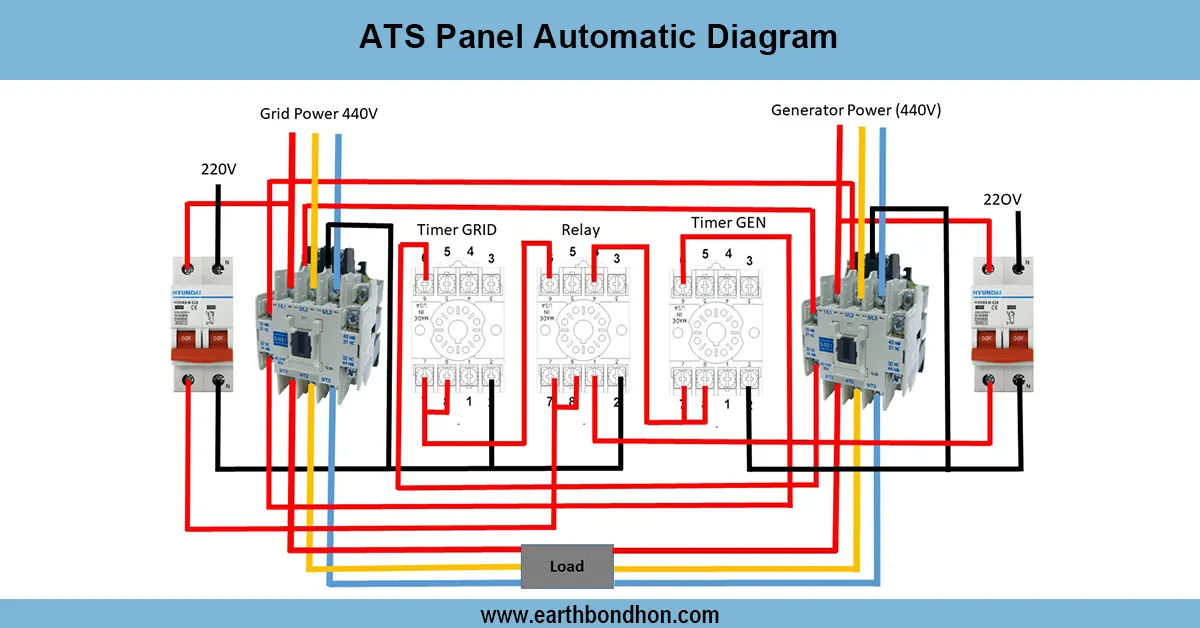
ATS panel automatically disconnects and connects mains and generator when there are outages. Right wiring with relays, contactors, and protection makes it safe, reliable, and smooth transfer of loads without manual aid.
load transfer ATS diagram
An ATS (Automatic Transfer Switch) panel is a panel that enables automatic, trouble-free switching of loads between mains and generator in the event of power failure. The mains supply, generator input, ATS relay, contactors, MCB/fuse, control circuits, and load panel connections are indicated in the wiring diagram. The ATS activates the generator start circuit when the mains voltage has dropped and transfers the load to the generator supply when the voltage has stabilized. Once the mains return, the load is automatically switched back by the ATS, a safe way of turning off the generator. Proper wiring will aid in smooth running, eliminate back-feed, shield the mains and generator, and be safe. ATS panels are used in industrial, commercial, and critical residential settings to provide continuous power. Appropriate earthing, labelling, and checking of the phase sequence are essential for reliable operation. Testing involves the simulation of mains failure, generator start/stop, load transfer, and the functioning of protective equipment.
Work & Installation (Input → Output Summary)
- Mains Supply (L1, L2, L3, N) enters ATS panel input.
- Generator Supply (L1, L2, L3, N) enters ATS generator input.
- ATS Relay & Contactors monitor mains voltage and control load transfer.
- MCB/Fuse protects both ATS and load panel circuits.
- Load Panel receives supply automatically from mains or generator.
- Generator Start Signal is triggered when mains fails.
- Automatic Return transfers load back to mains after voltage stabilizes.
Testing & Final Adjustments
- Verify insulation and correct the connection of mains and generator lines.
- Test ATS relay, contactors, and control circuits.
- Simulate mains failure to ensure the generator starts automatically.
- Observe load transfer from mains to generator after voltage stabilizes.
- Restore mains supply and confirm automatic return of load.
- Test MCB/fuse and overload protection for proper operation.
- Check phase sequence and voltage levels on mains and generator.
- Inspect earthing, connections, and panel labeling.
- Ensure smooth operation without sparking, vibration, or overload.
- Record results for maintenance and operational verification.