Creators
Rojony Khatun Author
Rojony Khatun
CalculatorToolsProjectExpert
Reviewers
Małgorzata Koperska, MD Steven Wooding
Last updated: January 14, 2026

Electrical Panel Wiring Diagram for Exterior Light Installation

🇺🇸
English
Default
🇪🇸
Español
Spanish
🇫🇷
Français
French
🇩🇪
Deutsch
German
Single Phase DP Rccb

Single Phase DP RCCB

Double Pole Residual Current Circuit Breaker designed to protect against earth leakage and electric shock

Single Phase DP MCB

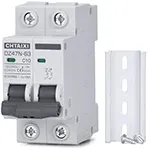
Single Phase DP MCB

Double Pole Miniature Circuit Breaker for single-phase supply

Single Phase digital Timer

Single Phase digital Timer

Programmable timer switch that allows automatic ON/OFF operation of electrical loads on a set schedule

Single Phase Contactor

Single Phase Contactor

Electromagnetic switch designed for controlling single-phase electrical loads

*Please note: These are affiliate links. I may make a commission if you buy the components through these links. I would appreciate your support in this way!

Single Line Diagram of panel Board

Learn exterior light wiring from the electrical panel, including switches, circuit breakers, protection devices, and load connections for safe outdoor lighting.

switch and breaker wiring diagram

Another example is external light wiring that is supplied by an electrical panel as a safe way of supplying power to outdoor lamps. Proper electrostatic coupling of breakers, switches, and earth guards to faults and permits valid outdoor lighting.

DIY multi-socket extension board

A DIY Power Extension Board Circuit can be used to easily increase one AC outlet into several sockets to power several devices at once safely. By wiring and using fuse protection and surge control, it is possible to avoid overcurrent, short circuits, and accidental shocks.

This tutorial has described how it works, parts, wiring, and the instructions on how to assemble a homemade power extension board. It discusses safety measures, troubleshooting, and the field of use as well. Based on this guide, hobbyists and students are able to create a sound extension board that can be used by them at home or in a small workshop, especially in case of convenience and safety.

Components Required for the Circuit

  • AC power socket (input)
  • Multiple AC sockets (output)
  • SPST switches for each socket
  • Fuse or Miniature Circuit Breaker (MCB)
  • Copper wires or PCB tracks
  • Surge protector module (optional)
  • Insulated enclosure or box
  • Screws and terminals

Working Principle of Power Extension Board

AC Mains Input

The AC mains supply enters the board through the input socket and fuse protection.

Fuse and Protection

The fuse or MCB protects the board and connected devices from overcurrent. A surge protector can safeguard sensitive electronics from voltage spikes.

Switch and Socket Operation

Each output socket is connected to an individual switch, allowing selective ON/OFF control. The switched AC flows to the connected devices safely.

DIY Power Extension Board Wiring Diagram

  • Connect live (phase) AC wire to the input socket and fuse.
  • From fuse, wire to individual SPST switches.
  • Connect each switch to its respective output socket live terminal.
  • Connect neutral wire directly from input to all socket neutral terminals.
  • Connect earth (ground) to all socket earth terminals.
  • Optional: connect the surge protector in parallel with the input AC.
  • Enclose circuit safely in an insulated box.

Step-by-Step Construction Guide

  • Select a proper insulated enclosure for the board.
  • Mount the AC input socket and multiple output sockets.
  • Install SPST switches for each socket.
  • Connect wires from the input to the fuse, then to the switches, and then to the output sockets.
  • Connect neutral and earth lines to all sockets.
  • Install optional surge protection module.
  • Tighten all screws and secure connections.
  • Test each socket with a small appliance before full use.

Safety Precautions

  • Always use insulated wires and proper enclosures.
  • Ensure fuse or MCB rating matches total load.
  • Avoid overloading sockets beyond capacity.
  • Double-check connections before powering the board.
  • Keep the board away from water or moisture.

Applications of DIY Power Extension Board

  • Home and office use for multiple devices
  • Small workshops for power tools
  • Lab experiments needing multiple AC sources
  • Temporary setups for events or DIY projects
  • Safe extension for computers, lamps, and electronics

Troubleshooting Common Issues

Board Not Powering Devices

  • Check input socket wiring and fuse.
  • Verify switches are ON and connected properly.

Fuse Blowing Frequently

  • Reduce total connected load.
  • Check for short circuits or faulty devices.

Socket Sparks or Overheating

  • Ensure proper gauge wire for current.
  • Use high-quality switches and sockets.
  • Avoid loose connections.

Frequently Asked Questions - Single Line Diagram of panel Board:

What components are included in exterior light wiring?

Main breaker, circuit breaker, switch, earth connection, and light fixtures.

Why is an earth connection needed?

To protect users from electrical shocks due to insulation failure.

Can timers be used?

Yes, timers or sensors can automate outdoor lighting.

What is the role of the circuit breaker?

Protects the light circuit from overload and short circuits.

How is the neutral wire connected?

Directly from panel to light fixture.

Can multiple lights share one circuit?

Yes, ensure the breaker rating matches the total load.

Is outdoor wiring different from indoor?

Yes, it must be insulated, weatherproof, and protected from moisture.

How to test the wiring?

Check continuity, switch operation, breaker, and earth connection.

Can sensors be added?

Yes, motion or light sensors can be integrated for automation.

Where is this wiring commonly used?

Residential gardens, street lighting, commercial outdoor installations, and industrial sites.

Comments

Please login to comment.

Rojony Khatun

Rojony Khatun

Calculator Tools Project

Rojony Khatun is the creator of a free online tools website designed to simplify everyday and engineering-related calculations for students, professionals, and hobbyists. The platform offers a wide variety of basic and advanced calculators across key categories, including Electrical Calculators, Electronic Calculators, and Time & Date Calculators, helping users solve problems quickly and accurately.