3-phase Motor Contactor Diagram
Learn contactor wiring with a latching circuit and a timer for automatic motor or load control, ensuring timed operation and continuous running until stopped.
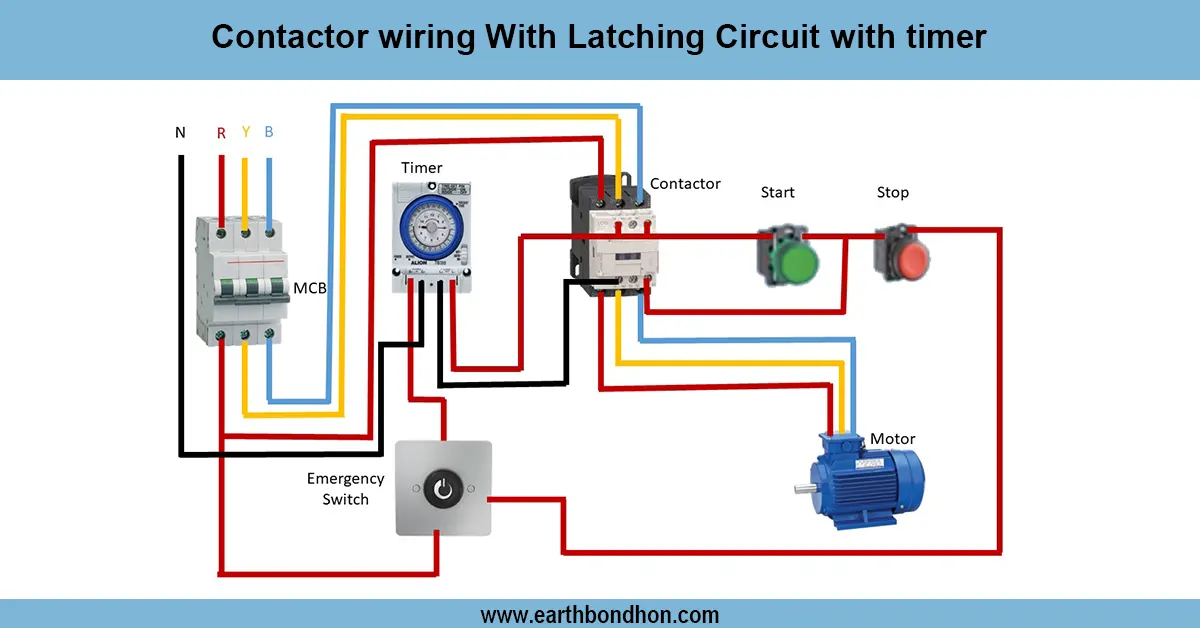
auxiliary contact timer wiring
Latching circuit and timer Contactor wiring allows the automatic operation and timed operation of motors or loads. It provides safe and reliable industrial control using auxiliary contacts, start/stop buttons, overload relay and timer.
motor timer contactor circuit
Latching circuit and timer contactor wiring allow motors or loads to automatically switch on after a preset period and be left on until de-energized. The system is equipped with a contactor, auxiliary latching contact, start/stop push buttons, overload and timer relays, and load connections. When the start button is pressed, the contactor coil is energized and the latching auxiliary contact is closed, which maintains the coil energized even after the start button is released. The coil can automatically be de-energized by the timer relay after a specified time of use. The stop push button can be disconnected manually. The overcurrent of the motor is safeguarded by the overload relay. Installation: Wiring of motors and timed control, latching continuity, and overload protection are all provided by proper wiring. This construction is typical in industrialized automation of motorized conveyors, pumps, and fans, where it is necessary to have timed or sequenced activity.
Work & Installation (Input → Output Summary)
- Supply Voltage connects to contactor coil and control circuit.
- Start Push Button energizes contactor coil.
- Auxiliary Latching Contact closes in parallel with the start button to maintain coil energization.
- Stop Push Button breaks the circuit and de-energizes the coil.
- Timer Relay de-energizes the coil after preset delay for timed operation.
- Overload Relay protects the motor from overcurrent by breaking the coil circuit.
- Motor or Load runs continuously or for a preset time until a manual or timed stop occurs.
Testing & Final Adjustments
- Verify all supply, contactor, timer, push buttons, and motor connections.
- Press start button; motor should start and auxiliary contact maintains coil energization.
- Timer should de-energize the contactor after a preset duration.
- Press the stop button to verify manual disconnection.
- Test overload relay by simulating overcurrent to ensure proper tripping.
- Inspect terminals, contacts, and wiring for secure and safe installation.
- Ensure correct timing adjustments on the timer relay.
- Test multiple start/stop cycles and timed operations for reliability.
- Confirm motor direction and smooth operation during timed cycles.
- Record results for maintenance and operational reference.