3-phase Motor Works
Learn how 3-phase motors work, including wiring, star-delta starting, rotation, protection, and operation principles for industrial and commercial applications.
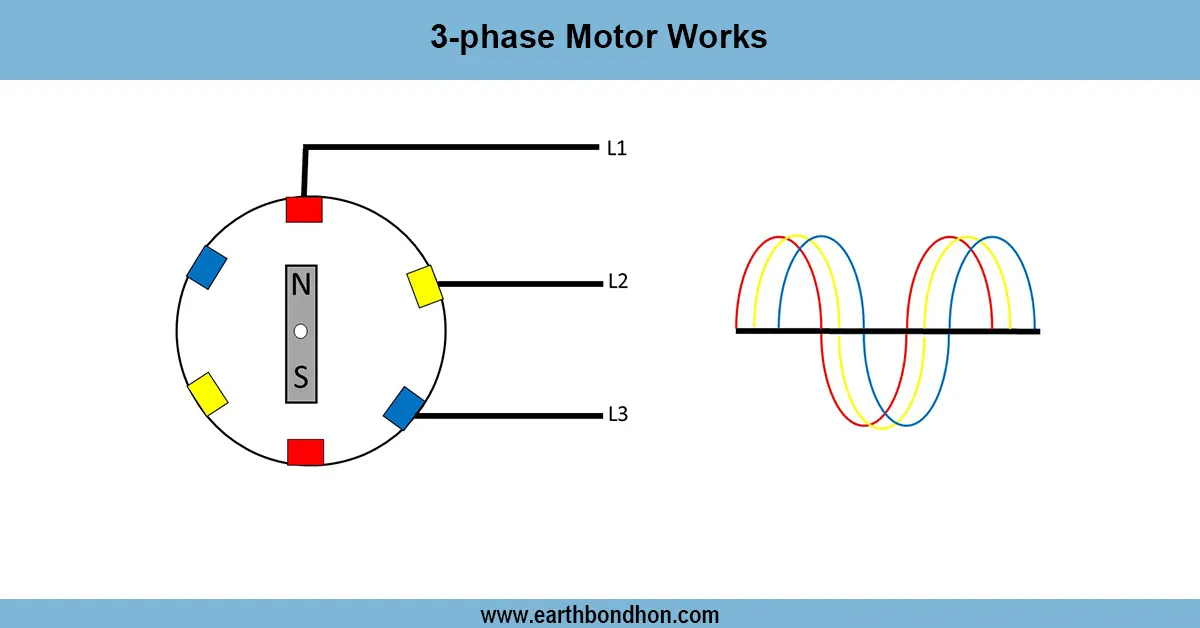
3 phase motor operation:
The operation of a 3-phase motor is that a rotating magnetic field is produced in the stator, and causes a current to move in the rotor, which causes a mechanical rotation. In industrial and commercial applications, correct wiring, selection of starters, and use of protection devices can lead to efficient and safe operation.
three-phase motor maintenance:
A 3-phase motor is a 3-phase AC motor that has widespread commercial applications in industries and commercial enterprises. It transforms electrical energy into mechanical energy on the principle of electromagnetic induction. The rotating magnetic field is created by the stator and induces current in the rotor, causing it to rotate. Motors may be either star-connected or delta-connected, depending on the use. With a star connection, the starting current is reduced, whereas with a delta connection, full voltage operation is possible. Overload relays, MCBs, fuses, and other types of protection devices prevent overcurrents and faults in the motor. The proper rotation direction is guaranteed with the right rotation phase sequence. 3-phase motors are more efficient, reliable, and have a better power factor compared to single-phase motors. Adequate wiring, grounding, and maintenance are what make it long-term. The tests involve insulation resistance, voltage check, phase sequence check, and load testing.
⚡ Work & Installation (Input → Output):
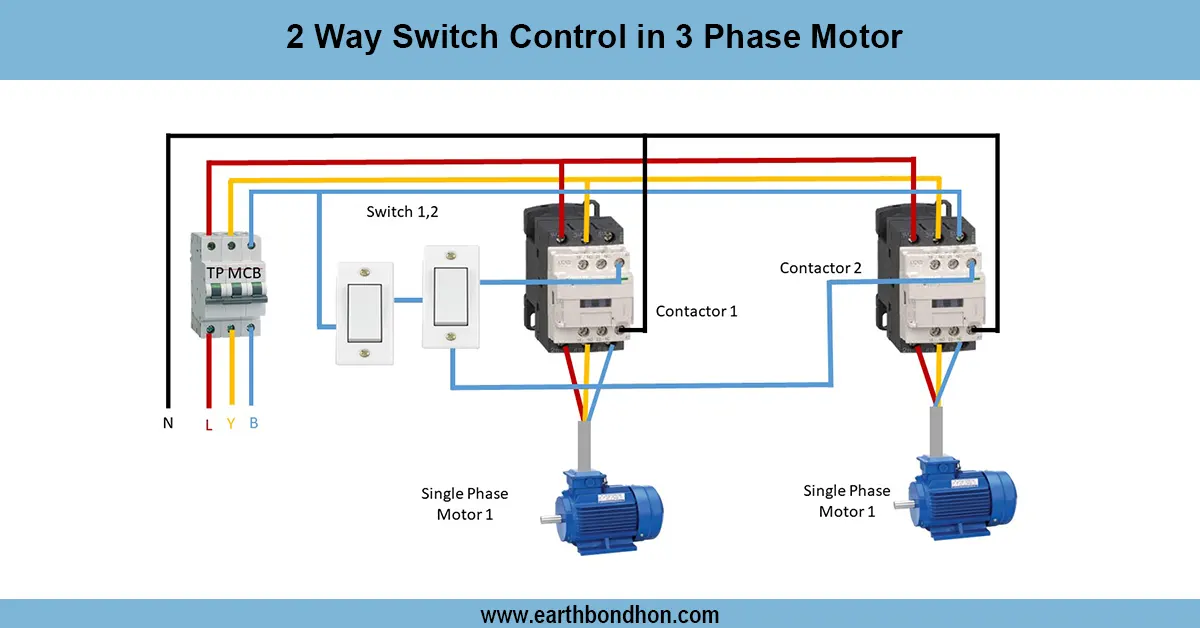
- 3 Phase Supply (R, Y, B) enters the motor starter panel.
- Main Contactor connects supply to motor terminals.
- Star or Delta Starter regulates starting current and operational voltage.
- Overload Relay monitors current and trips if excessive.
- Motor Terminals receive proper phase sequence for correct rotation.
- Mechanical Load is driven by motor shaft output.
- Motor operates efficiently with stable voltage and balanced load.
Testing & Final Adjustments:
- Check insulation resistance of motor windings.
- Verify phase sequence using a phase sequence tester.
- Energize motor and observe rotation direction; swap phases if reversed.
- Test starter operation (star-delta or direct-on-line) and ensure smooth transition.
- Simulate overload to check relay tripping.
- Measure running current and voltage for balanced load.
- Inspect connections, grounding, and busbar integrity.
- Verify protective devices operate correctly under fault conditions.
- Record test readings for maintenance records.
- Confirm motor operates reliably under full load conditions.