Creators
Rojony Khatun Author
Rojony Khatun
CalculatorToolsProjectExpert
Reviewers
Małgorzata Koperska, MD Steven Wooding
Last updated: January 14, 2026

Automatic Star-Delta Control Circuit Electrical Wiring Diagram

🇺🇸
English
Default
🇪🇸
Español
Spanish
🇫🇷
Français
French
🇩🇪
Deutsch
German
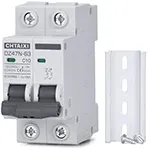
Single Phase DP MCB

Single Phase DP MCB

Double Pole Miniature Circuit Breaker for single-phase supply

Single Phase Contactor

Single Phase Contactor

Electromagnetic switch designed for controlling single-phase electrical loads

3 Phase Motor Overload Relay

3 Phase Motor Overload Relay

Protective relay that trips when motor current exceeds safe limits

Push Button Switch

Push Button Switch

A simple mechanical switch used to make or break a circuit when pressed. It returns to its original position once released. Commonly used in doorbells, calculators, reset buttons, and control panels.

*Please note: These are affiliate links. I may make a commission if you buy the components through these links. I would appreciate your support in this way!

Automatic star-delta Control Circuit

Learn automatic star-delta motor control circuit wiring with contactors, timers, overload protection, and push buttons for safe motor starting and operation.
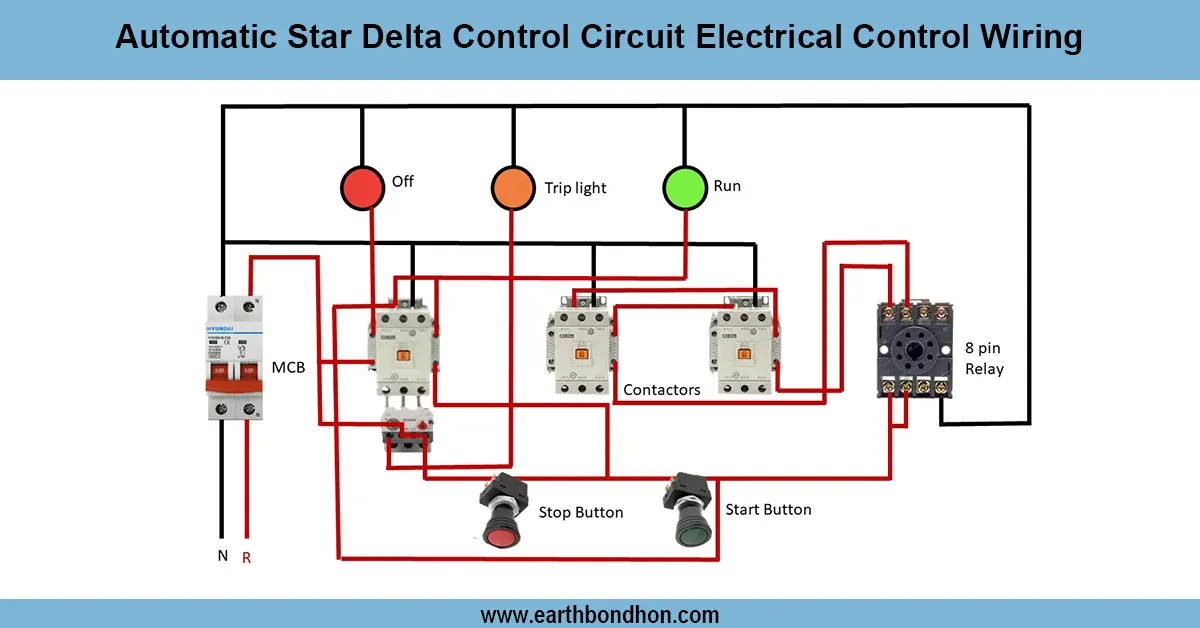
industrial motor wiring diagram

Star-delta motor control wiring is automatically wired to allow less inrush current at start, and a gradual transition to full speed operation. It is a safe and efficient way to have 3-phase motors running, using contactors, a timer, an overload relay, and interlocking.

timer switch connection for lighting load:

A timer switch is used to automatically turn on and off electrical appliances, lights, or AC loads based on a predetermined program. Wiring requires that the supply, composed of live (L) and neutral (N) supply, be connected to the timer input terminals, and the load be connected to the timer output terminals. The live wire should have the protective measures installed in series with protective equipment (MCB or fuse) to eliminate chances of overloading or short circuit. The timing and appliances that are connected should be earthed properly to make them safe. Timer switches may either be mechanical or electronic, with a variable programming of daily or weekly schedules. It is a common installation of this type of wiring in both residential and commercial, and industrial settings to conserve power, automate processes, and work more efficiently. Using the wiring diagram makes sure it works properly, minimizes human input, and safeguards equipment that is connected.

Work & Installation (Input → Output,)

  • AC Supply Input: Connect live (L) and neutral (N) to the timer input terminals.
  • Load Connection: Connect the electrical load (light, fan, AC, or other appliances) to the timer output terminals.
  • Protection Devices: Install an MCB or fuse in series with the live wire to protect the circuit from overload or short circuit.
  • Earthing: Properly earth the timer switch and any connected metallic appliances.
  • Timer Setting: Adjust the ON and OFF times according to operational requirements.
  • Operation: At the preset ON time, the timer energizes the load; at the OFF time, it disconnects power automatically.
  • Output: The load operates automatically according to schedule, conserving electricity and reducing manual operation.

Testing & Final Adjustments

Wire and check timer display. Once wired, switch ON the main supply. Test the immediate ON/ OFF operation by use of the manual override (where applicable). Note the attached load to check how it works properly at the scheduled time. Check all wiring by making sure they are securely connected, well insulated, and correctly earthing. Ensure that the protective devices (MCB/fuse) are of the right rating for the load. Set the clock to the right ON/OFF time. Identify the wiring to be easily identified. Periodic check-ups can ensure that timers work well, as well as increase the life of the appliances linked to them. Proper installation leads to the elimination of electrical risk, overloading, and energy efficiency.

Frequently Asked Questions - Automatic star-delta Control Circuit:

What is automatic star-delta motor control?

A motor starting method reducing inrush current using star-delta contactors and timer.

Why use star-delta starter?

To reduce starting current and mechanical stress on the motor.

Which devices are required?

Star contactor, delta contactor, main contactor, timer, overload relay, push buttons.

How does the motor start in star-delta?

Motor starts in star connection, then switches to delta after timer delay.

Is overload protection necessary?

Yes, to protect the motor from overcurrent or faults.

Can star and delta contactors energize simultaneously?

No, interlocking prevents simultaneous operation to avoid short circuits.

How to test star-delta wiring?

Start motor, observe star start, timer transition to delta, and overload relay operation.

Is this for 3-phase motors only?

Yes, typically used for 3-phase induction motors.

Where is star-delta starter commonly used?

Industrial pumps, compressors, conveyors, and other heavy machinery.

How to maintain star-delta system?

Regularly check wiring, contactor operation, timer, interlocks, and overload relay for reliability.

Comments

Please login to comment.

Rojony Khatun

Rojony Khatun

Calculator Tools Project

Rojony Khatun is the creator of a free online tools website designed to simplify everyday and engineering-related calculations for students, professionals, and hobbyists. The platform offers a wide variety of basic and advanced calculators across key categories, including Electrical Calculators, Electronic Calculators, and Time & Date Calculators, helping users solve problems quickly and accurately.