simple 3-phase Motor Control Circuit
Learn simple automatic 3-phase motor control wiring with auto-trip, overload relay, contactors, and push buttons for safe and reliable motor operation.
industrial motor control circuit
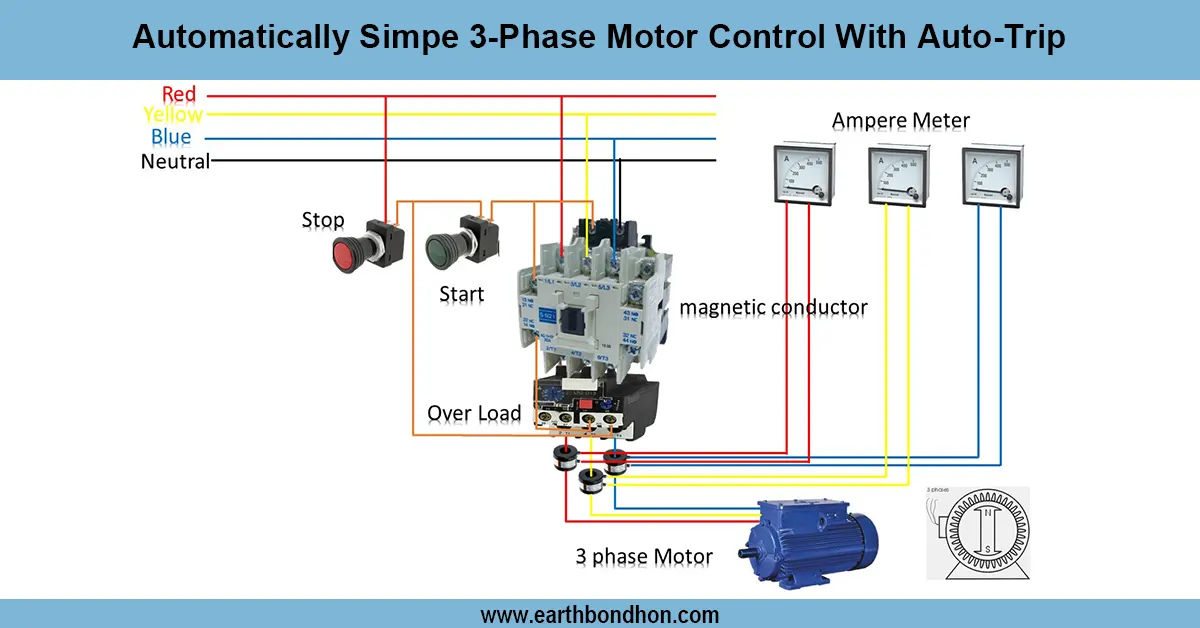
Auto-3 phase motor control with auto-trip protection will allow safe and reliable operation, where the motor will automatically be disconnected in case of overload or fault. The system allows the motor operation to be constant and safe using contactors, an overload relay, and push-button control.
contactor motor starter diagram
A basic automatic 3-phase motor control with auto-trip provides a way of operating the motor safely and avoiding overloading. Components of the system are the main contactor, start/stop push buttons, overload relay, auto-trip mechanism, and 3-phase connections to the motor. The contactor becomes energized when the start button is pushed and provides a 3-phase power to the motor. The overload relay constantly maintains a check on current flow; should a high current flow be detected, then it sends the auto-trip mechanism into action, and then it breaks contact on the motor before it can be harmed. The stop button enables an operable motor stop. This arrangement provides safe control of the motor, guarantees against short circuiting or overloading, and provides an easy automatic mode of control. It finds extensive application in industrial pumps, conveyors, compressors, and other equipment that needs high-quality 3-phase motor operation. Appropriate wiring, phase sequence check, and testing are the key to operational safety and decreased motor wear.
Work & Installation (Input → Output Summary)
- 3-Phase Supply enters motor starter panel.
- Main Contactor energizes when the start button is pressed, supplying power to the motor.
- Overload Relaycontinuously monitors motor current.
- Auto-Trip Mechanism disconnects motor if overload occurs.
- Stop Push Button allows manual motor disconnection.
- Motor rotates safely, driving a mechanical load.
- System automatically protects the motor from overcurrent faults.
Testing & Final Adjustments
- Verify insulation and wiring connections for mains and motor.
- Check phase sequence for correct motor rotation.
- Press start button; ensure motor starts smoothly.
- Observe overload relay; simulate overcurrent to test auto-trip function
- Press stop button; confirm motor stops manually.
- Inspect contactor operation and ensure no simultaneous faults.
- Test MCB/fuse and ensure proper protection.
- Verify earthing and secure all connections.
- Ensure smooth motor operation under load without sparks or vibration.
- Record results for operational reliability and maintenance reference.