
3-phase Star-Delta Motor Connection
Learn 3-phase star-delta motor connection, wiring diagram, starter setup, protective relays, and safe motor operation for industrial applications.
3 phase star delta motor wiring:
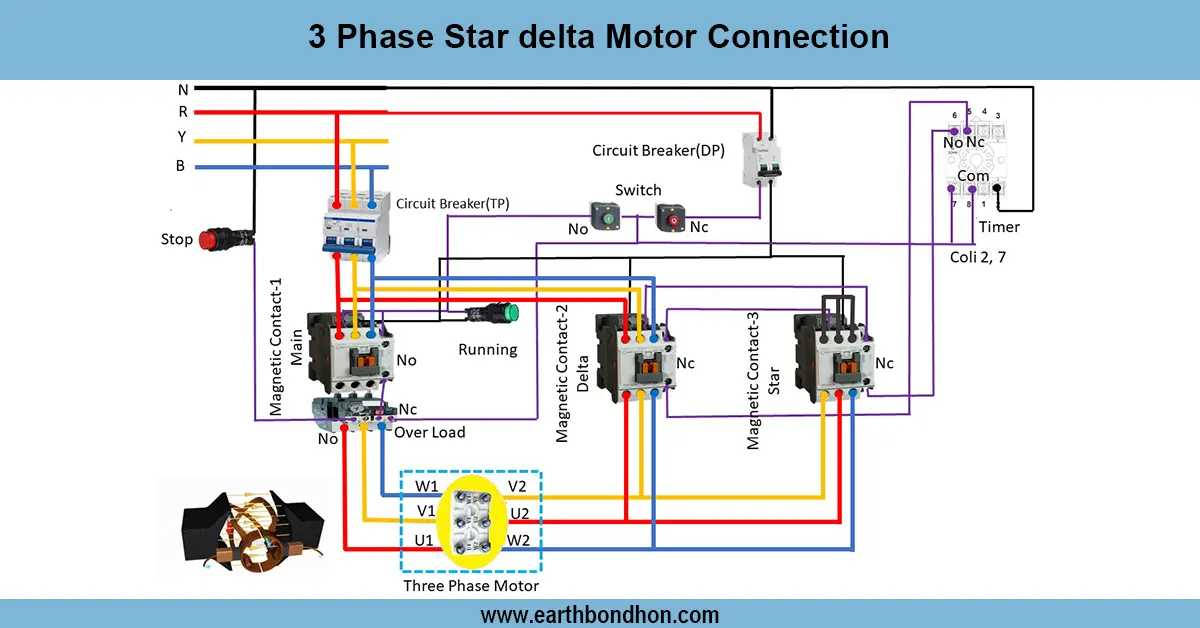
One way of starting induction motors with less inrush current is a 3 phase star-delta motor connection. Starting with star mode, when the voltage per phase is reduced, then the normal running is changed to delta. Protective relays/timers are used to assure safe operation and avoids destruction of the motor and supply system.
induction motor starter connection:
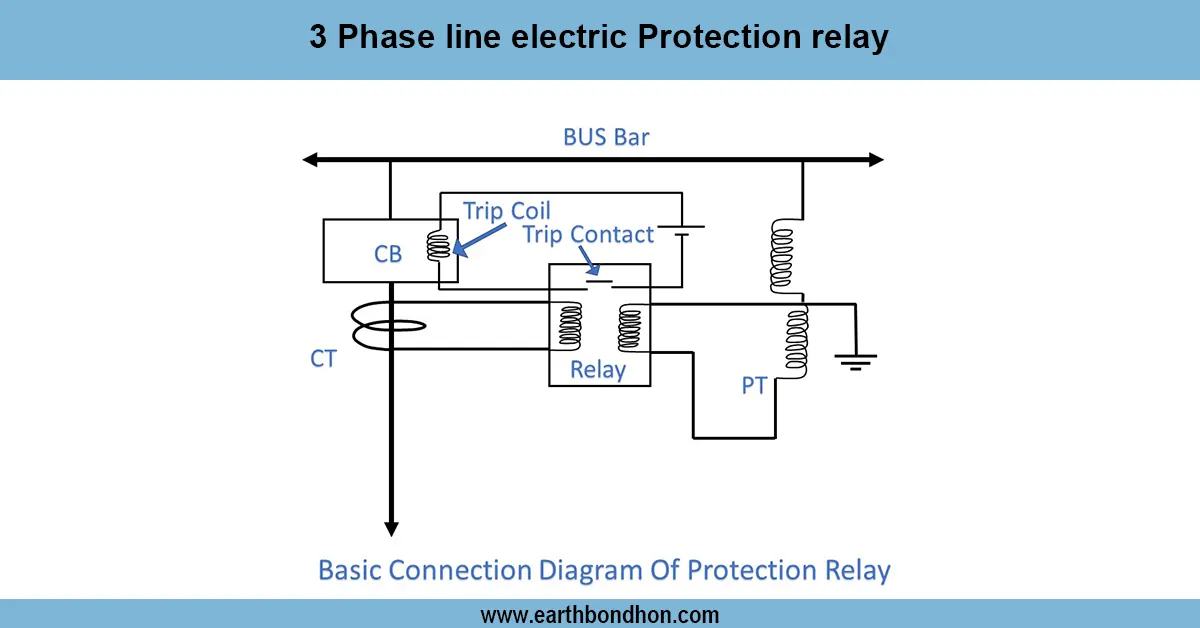
The large induction motors are started safely with a star-delta motor connection that reduces the starting current of the motor. First, the windings of the motor are reduced in star, thereby reducing the voltage per phase, and inrush is restricted. Once the motor has been accelerated to a close to full speed, the connection is switched to delta, where full line voltage is provided and normal operation is supported. This type of starter system is used to protect the motors, relieve the electric strain, and avoid dips in the supply. The wiring consists of three contactors (Main, Star, Delta), an overload relay, and a timer to make the transition. Appropriate connections provide proper phases, equal voltage on all windings, and safe running of the motor. The motor is protected by protective relays, including overcurrent, earth fault , and thermal overload relays. This is common in pumps, compressors, conveyors, and industrial machinery. Post-installation Testing would be done to make sure that the motor starts easily, shifts properly, and runs at full efficiency.
⚡ Work & Installation (Input → Output):
- Incoming 3 Phase Supply connects to motor control panel.
- Main Contactor provides connection to motor windings.
- Star Contactor connects motor windings in star for reduced starting current.
- Delta Contactor switches motor to delta after preset time for full running voltage.
- Overload Relay monitors motor current and trips if excessive.
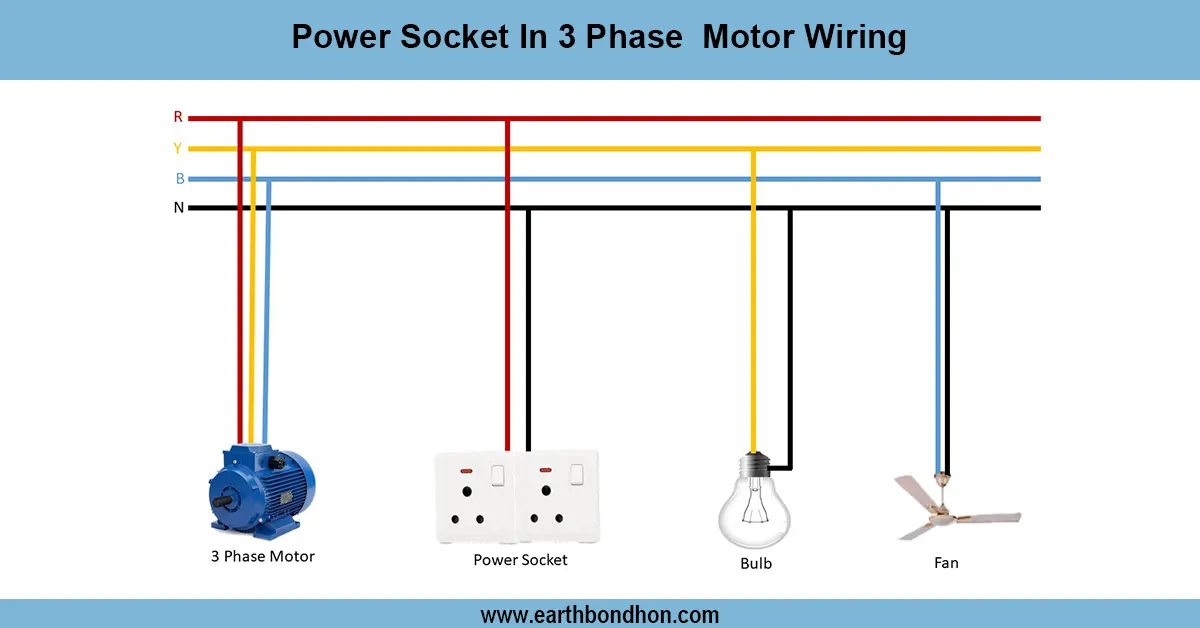
- Motor terminals receive correct R, Y, B phase connections.
- System ensures safe starting, correct rotation, and efficient running.
Testing & Final Adjustments:
- Verify insulation resistance of motor windings.
- Check phase sequence using a phase sequence tester.
- Energize motor in star mode, measure starting current.
- Timer transitions motor to delta mode; ensure smooth switching.
- Test overload relay by simulating overcurrent; confirm tripping.
- Check rotation direction; swap two phases if needed.
- Measure running current, voltage, and ensure balanced load.
- Verify proper grounding and connection integrity.
- Ensure contactors operate without sparking or delay.
- Record all test readings and finalize motor operation log for maintenance reference.