


Wiring Diagram for Light Switch
Learn dipolar remote switch wiring for safe maneuvering of motors and appliances with remote ON/OFF control and electrical protection.
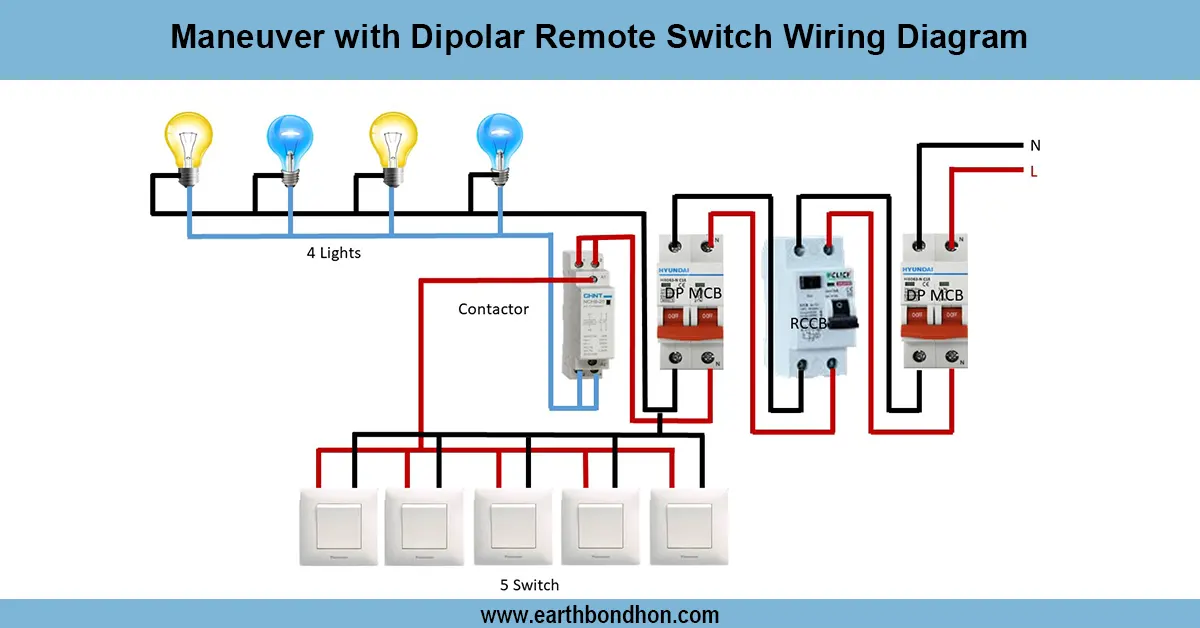
electrical maneuvering circuit
A dipolar remote switch allows the line and neutral to be safely maneuvered. It is widely applied to contactors or relays to remotely control high-current loads with safety and protection.
industrial remote switch wiring
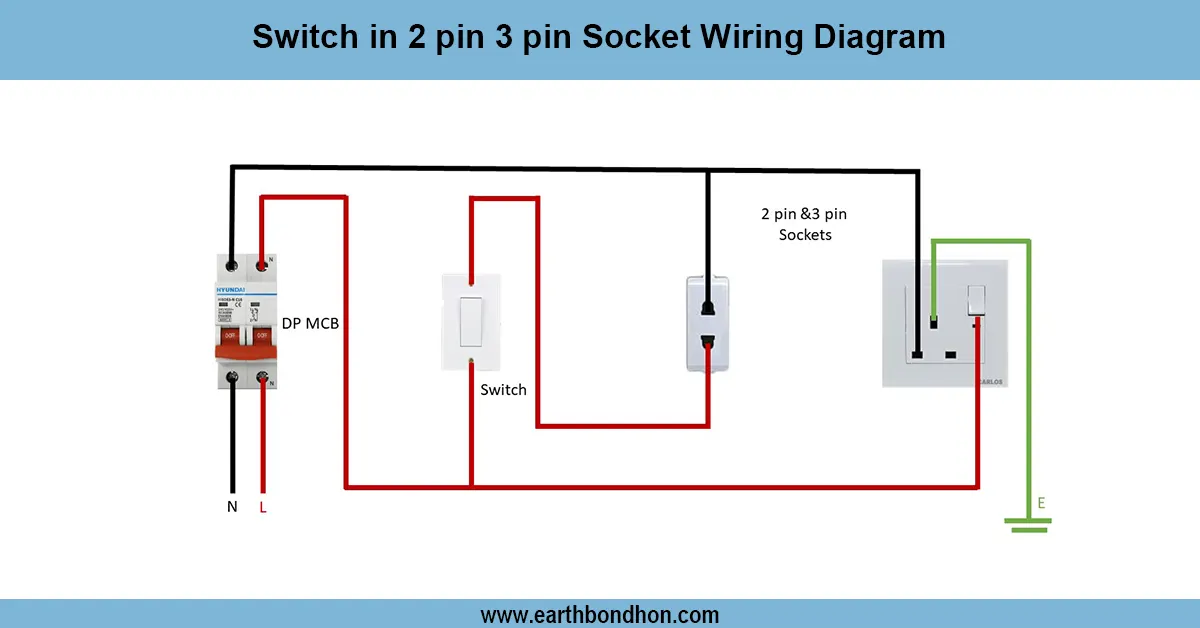
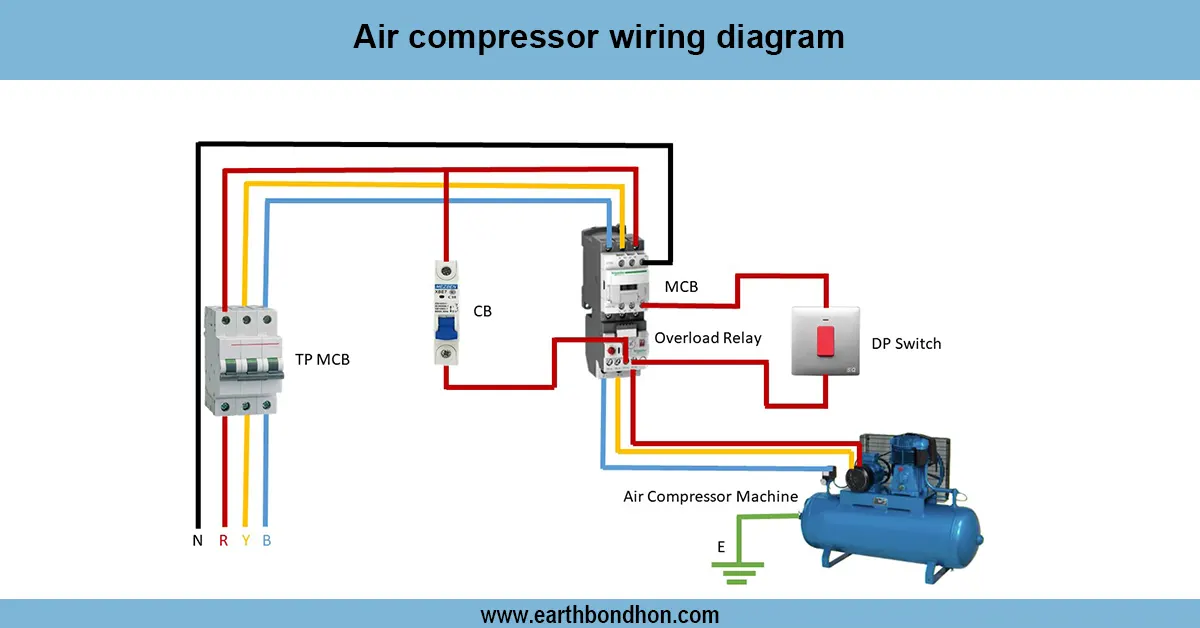
Dipolar remote switch wiring. Maneuver Remote Control Maneuver, Remote operation of motors or appliances using a two-pole switch in each line, live and neutral. A current-carrying MCB overload passes through the AC supply to the remote switch. The dipolar switch can safely switch ON/OFF the connected load some distance away. Increased current loads are commonly controlled by a contactor or a relay, whereby a remote switch controls low current to activate coils. Indicator lamps may be ON/ OFF. Proper wiring ensures safety during electrical conditions and eliminates back feeds and destruction of appliances. Testing is done to confirm that the remote switch works to open and close the load in the correct manner, the contactor works correctly, and the MCB trips correctly when fault conditions arise. It is widely used in industrial motors, water pumps, and lighting circuits to simply and safely manipulate remote operation.
Work & Installation (Input → Output Summary)
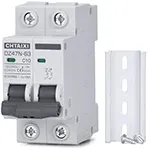
- AC Supply connects to main MCBfor protection.
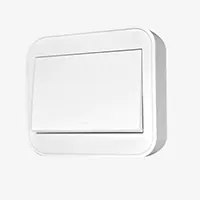
- Supply goes to thedipolar remote switch (two-pole) controlling line and neutral.
- Remote switch output activates a contactor/relayif controlling high-current loads.
- Load (motor or appliance) connects through contactor output.
- Indicator lamps show load ON/OFF status.
- Proper wiring preventswhile allowing remote operation. short circuits, back-feed, and electrical hazards
Testing & Final Adjustments
- Verify AC supply, MCB, dipolar switch, contactor/relay, and load connections.
- Switch ON/OFF remotely; confirm load operates correctly.
- Test contactor coil activation using remote switch; verify it handles high-current load safely.
- Inspect MCB operation under overload or fault conditions.
- Check indicator lamps for correct status display.
- Ensure proper insulation and secure mounting of all components.
- Test multiple ON/OFF cycles to confirm reliability.
- Verify line and neutral polarity at the dipolar switch and load.
- Confirm no back-feed into the supply line during remote operation.
- Document wiring, testing results, and load specifications for maintenance reference.