
1-way Light Switch wiring diagram
Learn one lamp switch connection with wiring diagram, step-by-step installation, working principle, and testing guide for safe home electrical wiring.
one lamp switch connection diagram
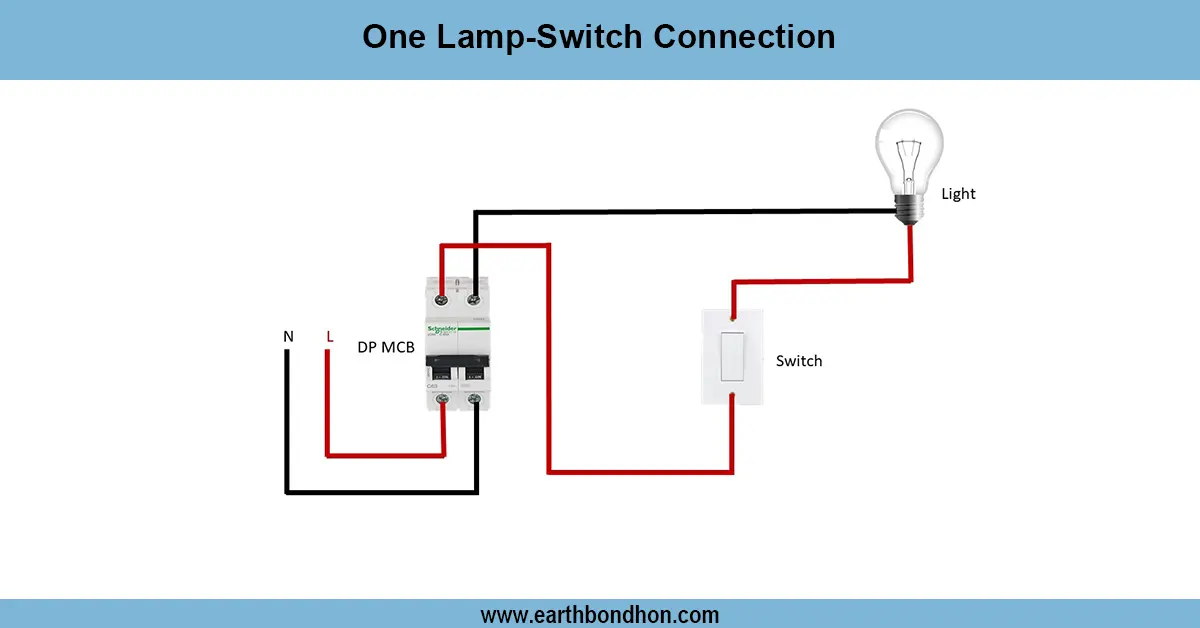
A simple SPST switch is used as a one-lamp switch connection. The switch is bypassed, and the neutral directly joins the lamp.
lamp switch wiring connection
The most basic and common electrical wiring that is used in homes and offices is a one lamp switch connection. A single lamp or bulb is controlled by a single-pole single-throw (SPST) switch in this type of wiring system. One of the terminals of the switch is connected to the phase (line) wire used in the power supply. A wire leads out of the other end of the switch and goes to the phase line of the lamp. The supply neutral is hard-wired to the lamp neutral. When the switch is switched ON, the circuit is complete and the lamp shines; when the switch is switched OFF, the circuit breaks and the lamp goes off. This is popularly applied in rooms, offices, corridors, and small spaces to control basic lighting.
Work / Installation (Inputs → Outputs)
- Input: Line (phase) and neutral from supply.
- Output: Lamp connection.
steps:
- Connect the phase (line) wire from the supply to one terminal of the switch.
- Connect a wire from the other terminal of the switch to the phase terminal of the lamp.
- Connect the neutral wire directly from the supply to the neutral terminal of the lamp.
- Connect the earth wire to the lamp holder or metal body for safety.
Now, when the switch is turned ON, the current flows through the lamp and it glows.
Testing and Final Adjustments
Once wired, turn OFF the main supply and take another look at the connections. Make sure that the phase wire goes through the switch and the lamp is directly attached to the neutral. After this has been established, switch on the supply and test by pressing the switch. The lamp is to be turned off and on. Ensure that all connections are tight and none of the wires are loose. Wire and cable fasciculations should be insulated with the correct insulation tape to prevent electric shock. To be on the safe side, it is advisable to always attach the earth wire to the lamp body or metal. This makes the circuit safe, reliable, and long-lasting.