4 Gang Switch 4 Bulb Wiring
Learn how to wire a 4-gang switch to control 4 individual bulbs. Ideal for multi-light room setups with simple step-by-step wiring guide and diagram.
multiple light switch wiring
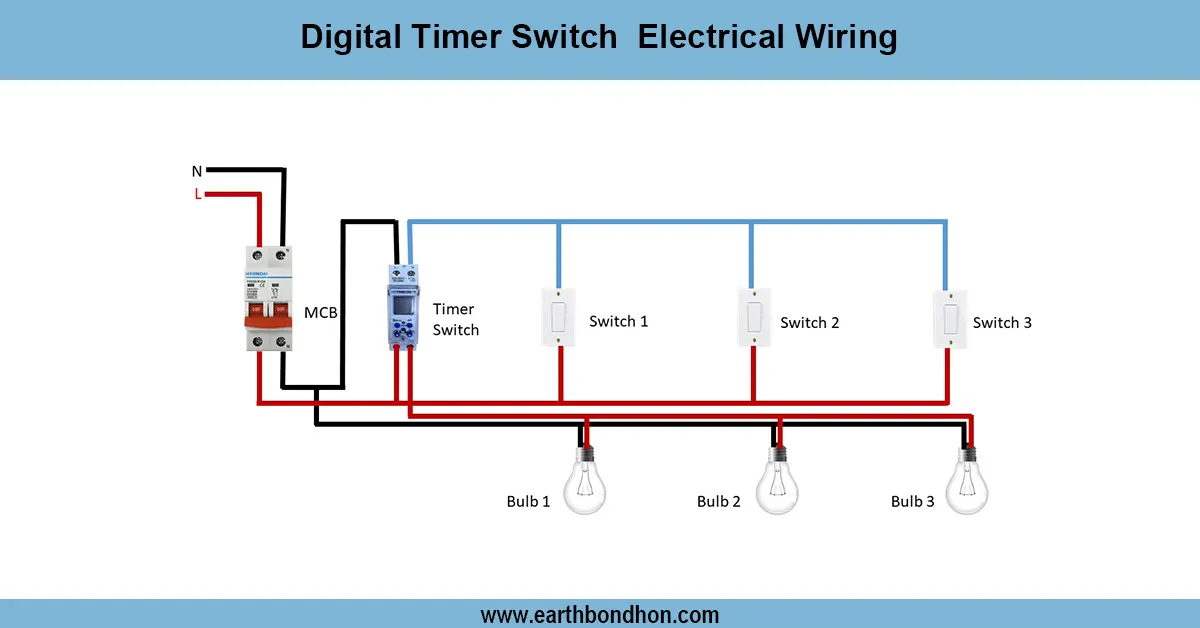
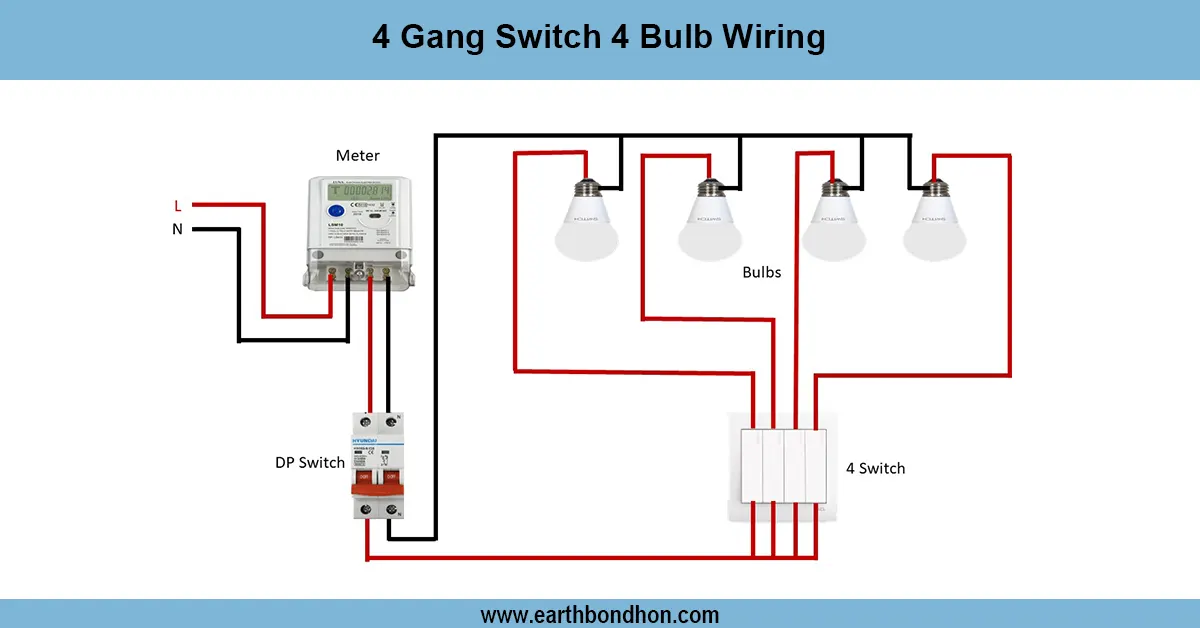
The use of a 4 gang 4 bulb wiring diagram shows how it is possible to switch on / switch off four light bulbs with the use of four separate scitches controlled independently. The switches should be connected in series with each being connected to one bulb, and should be on the same phase and neutral. This is a more independent control of every light and could be used in a switchboard of rooms, hallways and offices.
automatic inverter wiring diagram
There is an automatic system to convert a 220 V line to an inverter to keep power constant in the event of mains failure. This system consists of an AC mains input, an inverter unit, a relay or ATS, a battery backup, and load panel connections. In normal operation, it is mains power that supplies the load. Mains failures are automatically compensated by the starting inverter, which provides the load with AC power from the batteries. Relay or ATS circuits are used to make the switching of mains and inverter automatic to avoid back-feeding. MCB / fuse and overload protection protect the inverter, batteries, and loads. The arrangement is commonly employed in homes, businesses, and industrial settings in need of a constant supply of power. Correct wiring means a smooth-running, safe, and long-lasting battery. The installation involves connection of mains, inverter output, relay/ATS, batteries, and load panel, polarity, earthin, and protection are correct. The testing includes the simulation of the mains failure, the monitoring of inverter activation, and checking the protective devices to make sure that they work properly.
Work & Installation (Input → Output Summary)
- 220V AC Mains Supply enters inverter control panel.
- Inverter Unit converts DC battery power to AC during mains failure.
- Relay or ATS automatically switches load from mains to inverter output.
- Battery Backup supplies inverter during mains outage.
- Load Panelreceives continuous AC supply without interruption.
- MCB/Fuse and Overload Protection safeguard inverter, batteries, and connected devices.
- System automatically returns load to mains after power restoration.
Testing & Final Adjustments
- Verify AC mains, inverter output, and battery wiring insulation.
- Check correct polarity and earthing connections.
- Simulate mains failure; ensure inverter starts automatically.
- Observe load transfer from mains to inverter without interruption.
- Test relay/ATS operation to prevent back-feeding.
- Check MCB/fuse and overload protection under simulated faults.
- Confirm battery backup delivers power for the expected duration.
- Test return to mains after restoration to ensure smooth switching.
- Record results to confirm reliable and safe operation of the automatic inverter system.
Frequently Asked Questions - 4 Gang Switch 4 Bulb Wiring:
What is a 4 gang switch?
A switch panel with 4 individual switches to control 4 separate loads.
Can I use 1 gang box for 4 bulbs?
Yes, with a 4 gang switch and proper wiring.
How many wires for 4 switch control?
Each switch needs live-in, and live-out to each bulb.
What size breaker for 4 bulbs?
A 6A breaker is typically sufficient for low wattage bulbs.
Can I use LED bulbs in this wiring?
Yes, LED bulbs are compatible and energy-efficient.
Is neutral wire needed in switches?
Not in basic switches, only live wire passes through switches.
Which wire goes to common terminal?
Live wire connects to the common terminal.
Are all bulbs controlled separately?
Yes, each switch operates one bulb independently.
What color wire is live?
Usually red or brown for live wires.
Can I extend this to more switches?
Yes, use a 5 gang or 6 gang switch with additional wiring.