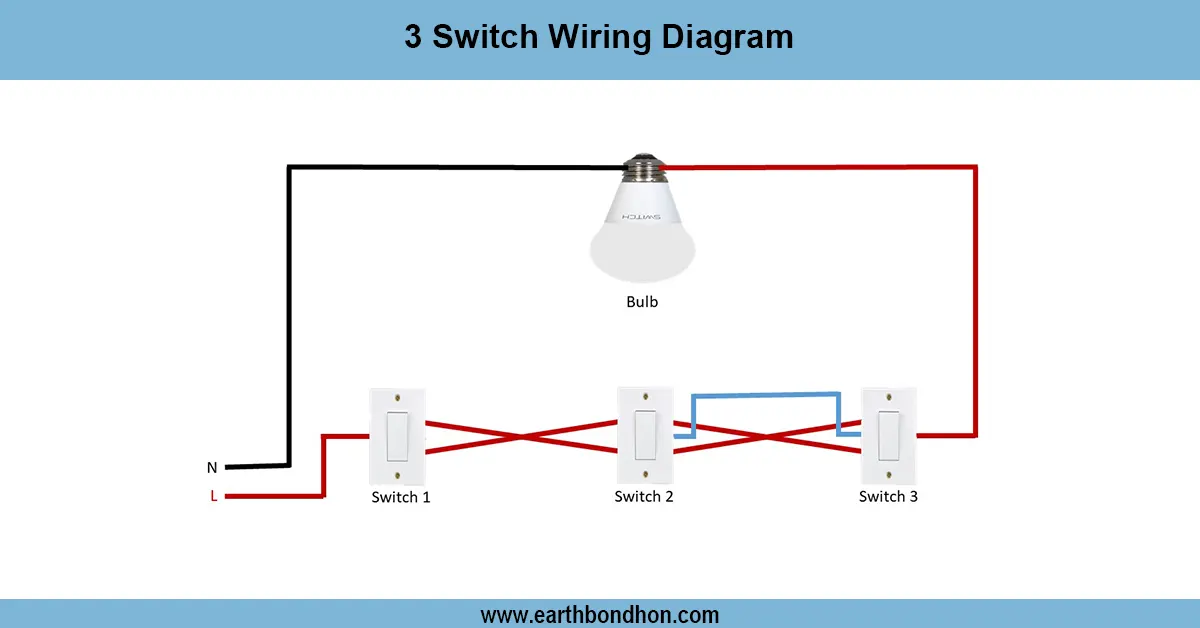
4 Switch 1 Light Control Wiring
A wiring diagram showing how to control one light using four different switches from different locations. Ideal for staircases or long corridors.
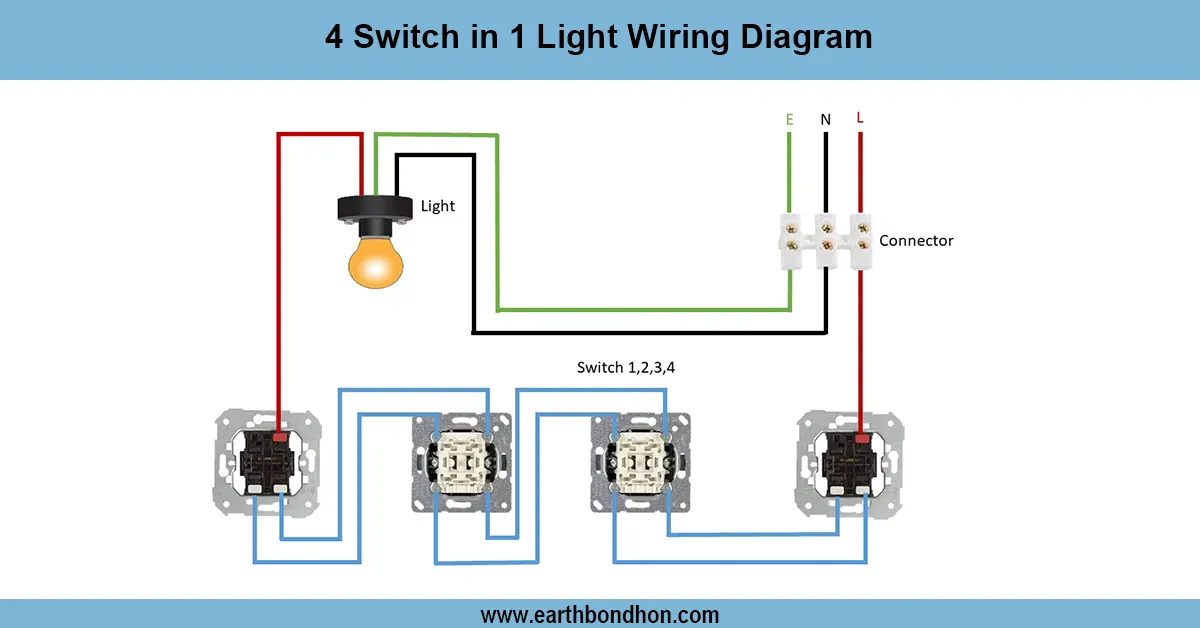
multiple switch one light
A 1-light, 4-switch circuit connection can enable you to switch a light on or off at any of four switches. This is done by use of two (2) 2-way (SPDT) switches and two intermediate switches (DPDT or 4-way). This installation is often in a large hall or staircase when there are several access points to the light in question. The wiring layout and the way the switches link are imperative to shun confusion or short circuits. The simplified explanation and diagram are given below, which can be followed easily.
3 phase motor plc control program:
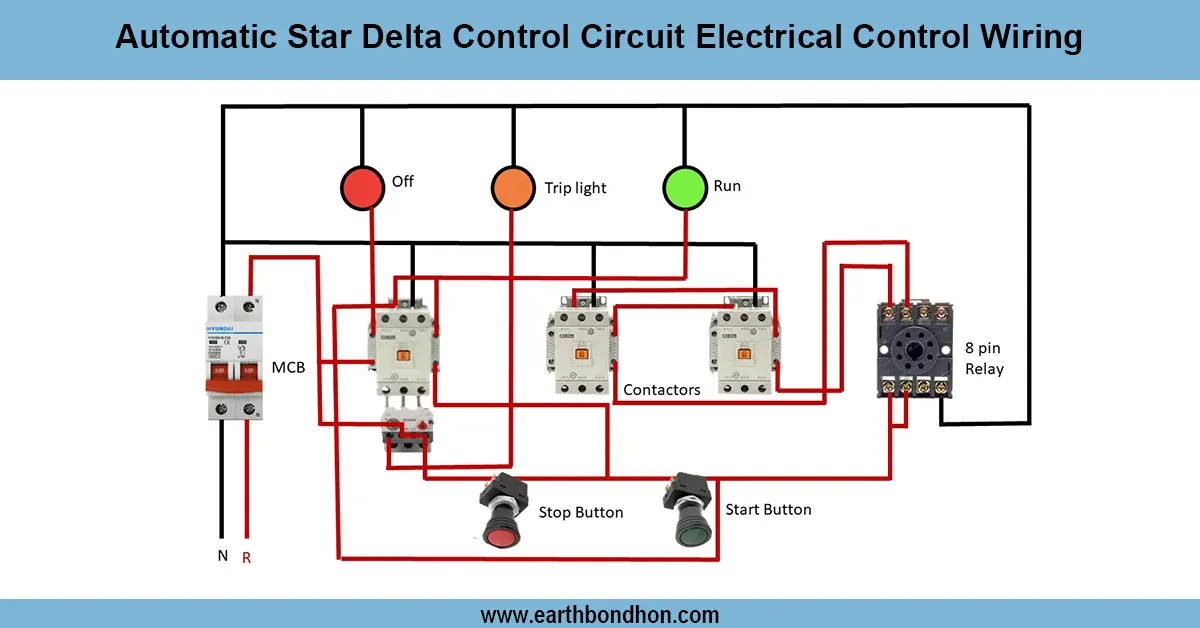
A Star-Delta Starter PLC Program permits 3-phase motors to be started safely and automatically, and minimizes inrush current. The system will consist of the Main (MC), Star (SC), and Delta (DC) contactors, a timer, and an overload relay. Start/stop pushbuttons and motor sensors are the inputs to the PLC. The sequential output of the PLC controls the MC, the SC, and the DC to allow the motor to start in the star mode, switch to the delta mode after a predetermined timer delay, and may have the forward/reverse direction. With a PLC, it becomes easier to have flexibility of time, interlocking logic, and monitoring of the motor. The safety of all the electrical components is achieved by proper earthing. After the PLC program, there is guaranteed reliable, safe, and efficient operation of the motors and eliminating contactor or motor damage and extending the possibility of integration with HMI or SC systems in industrial automation.
Work & Installation (Input → Output,)
- Input Supply: 3-phase AC via MCB/fuse.
- Main Contactor (MC): PLC output energizes MC to connect the supply to the motor circuit.
- Star Contactor (SC): PLC output energizes SC to start the motor in star mode.
- Delta Contactor (DC): PLC output energizes DC after timer delay to switch to delta.
- Overload Relay: Protects motor from overcurrent.
- PLC Inputs: Start/Stop pushbuttons, motor sensors, and timer signals.
- PLC Outputs: Sequentially control MC, SC, and DC.
- Earthing: Ground motor, PLC, and contactors.
- Output: Motor starts in star, transitions to delta safely, with automated timing and interlocks for protection.
Testing & Final Adjustments
Wire completed, switch on PLC and check input signals, start/stop push buttons, and motor sensors. Press start and ensure the motor starts in the star mode. Watch PLC timer; receipts SC opens and DC closes and goes to delta mode. Check tripping of overcurrent or overload relays. Test wiring in respect of insulation, correct polarity, and earthing. Check a few start/stop cycles to ensure good working PLC connection of contactors and sequence. Adjust PLC program timer or interlock logic as required. Labeling of wiring and components makes it easy to maintain wiring and components. The correct testing helps to avoid damage to the motors and contactors, to provide smooth operation, and to be integrated with HMI/SCADA to monitor them.
Frequently Asked Questions - 4 Switch 1 Light Control Wiring:
What is a 4 switch 1 light wiring diagram?
It shows how to control a single light from four switches using 2-way and intermediate switches.
Can I use only 2-way switches for 4-point control?
No, you need two intermediate switches along with 2-way switches for proper 4-point control.
Where is this wiring commonly used?
In long corridors, staircases, or large halls where multiple access points are needed.
How many wires are required?
Typically, 5 to 7 wires depending on layout: Live, Neutral, and multiple travelers.
What is an intermediate switch?
It is a 4-way switch that connects or crosses over the traveler wires between two 2-way switches.
Is a neutral wire needed in the switch box?
Usually not in switch boxes, but it's necessary in the light box.
Is this setup safe for high-wattage lights?
Yes, if the wiring and switches are rated properly for the load.
Can I use smart switches in this setup?
Yes, but you may need specially compatible 4-way smart switch systems.
Does the wire color matter?
Yes, follow standard electrical color codes for safety and clarity.
Can I DIY this wiring?
Yes, with basic electrical knowledge, but professional installation is recommended for safety.