

Float Switch Wiring Diagram for Pump
Learn float switch wiring for water pump to automatically start/stop based on water level, ensuring safe and efficient operation of tanks and pumps.
water level switch wiring diagram
Float switches are automatic water controllers that make the water pumps responsive to the levels of water. Correct wiring would make the pump go off when the water is low and off when the tank is full to allow the pump to dry off.
industrial water pump level control
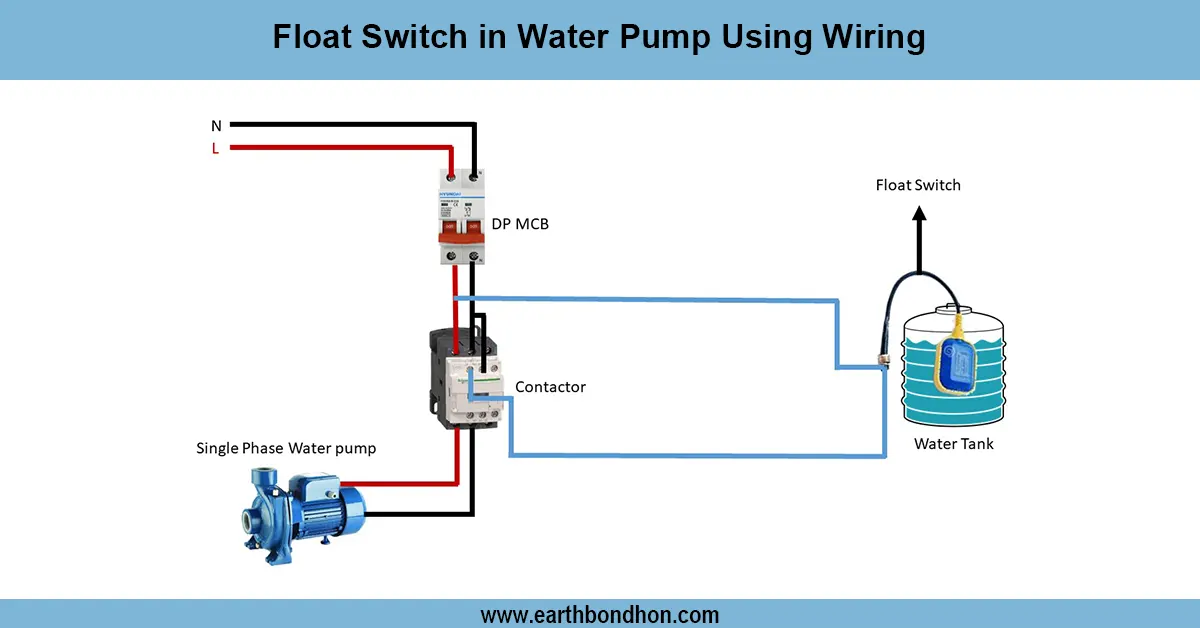
Wiring of a water pump has a float switch, which allows the pump to start and stop automatically according to the amount of water in a tank or reservoir. The float switch is wired in series with the pump starter or contactor coil; therefore, when the water level goes below a set point, the float switch closes, releasing energy to the pump to refill the tank. When the water attains the upper level, the float switch is opened, and it de-energizes the pump, halting it. The wiring will consist of line and neutral connections, a pump motor, a contactor or relay, and the float switch. Others come with manual bypass switches or operational indicator lamps. Proper wiring will make the water level automatically controlled, avoid dry running of the pump, protect the motor, and conserve energy. Testing is related to modeling water levels and checking the work of pumps. The float switch is a wiring commonly used in residential, commercial, and industrial water systems.
Work & Installation (Input → Output Summary)
- AC Supply connects to pump control circuit through float switch.
- Float Switch closes when water is low, energizing the pump starter coil.
- Pump Motor receives supply and starts filling the tank.
- Float Switch opens when water reaches upper level, de-energizing pump.
- Optionalindicator lamp shows pump operation status.
- Proper wiring ensuresautomatic start/stop, motor protection, and energy efficiency.
Testing & Final Adjustments
- Verify line, neutral, and float switch wiring connections.
- Simulate low water condition; pump should start immediately.
- Simulate full tank; pump should stop when float switch opens.
- Test optional indicator lamps for correct ON/OFF indication.
- Inspect terminals for secure connections and proper insulation.
- Repeat test cycles multiple times to ensure reliability.
- Confirm that the pump does not run dry when the water is below the safe level.
- Check contactor/relay operation and ensure no voltage drops.
- Ensure float switch floats freely and moves correctly with the water level.
- Record results for maintenance and operational safety documentation.