

Ceiling Fan Regulator connection
Wiring diagram showing how to connect a two way switch with a regulator to control ceiling fan speed and ON/OFF from two locations.
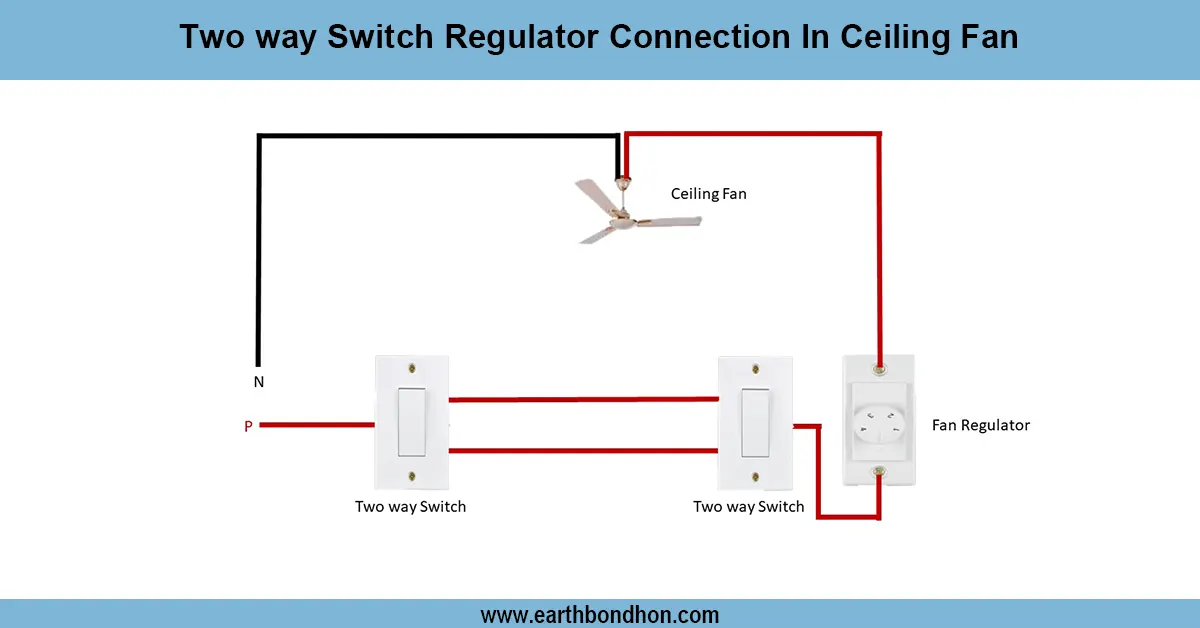
two way switch regulator wiring
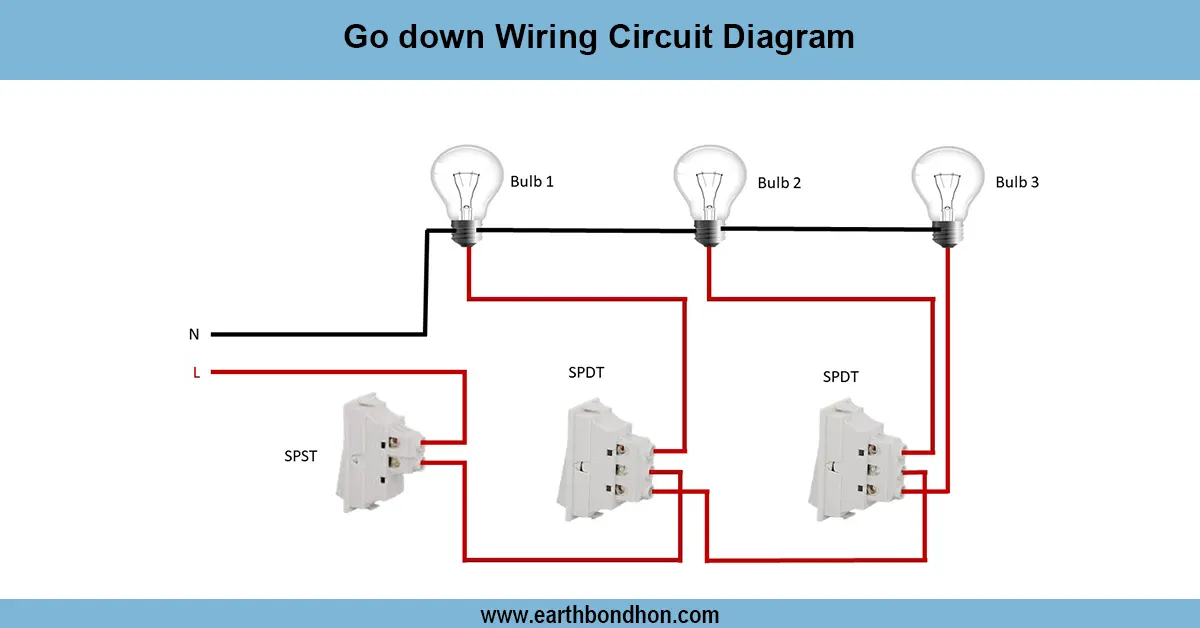
Two way switches can be used with fan speed regulator, and this enables controlling the ceiling fan using two locations by allowing both switching of ON/OFF and fan speed control.
Formula & Table Summary:
Components: Two SPDT switches (two way), one fan speed regulator, ceiling fan motor, live (L), neutral (N), traveler wires.
Connections: Live supply wired through two way switches and regulator to fan; traveler wires connect two switches; neutral connected directly to fan.
Operation: Either switch toggles fan ON/OFF; regulator controls fan speed.
Safety: Power must be off during installation; use suitable wire gauge and follow wiring standards.
| Terminal | Connection | Function |
|---|---|---|
| Live Supply (L) | Connect to Switch 1 Common Terminal | Power input to circuit |
| Switch 1 Travelers | Connect to Switch 2 Travelers | Switching paths |
| Switch 2 Common Terminal | Input to Fan Regulator | Controls power to regulator |
| Regulator Output | Connect to Ceiling Fan Live Wire | Regulates fan speed |
| Neutral (N) | Connect directly to Ceiling Fan Neutral | Completes circuit |
two switch fan regulator connection
This type of wiring permits one to regulate the speed of a ceiling fan and activate the ON/OFF status of the fan, in two separate locations, with a two way switch and fan speed control. The two way switches enables a control of the fan power manually at either point and the regulator is used to gradually change the fan speed. The wiring entails the connection of the live wire via the two way switches and the regulator prior to arriving at the fan motor. Neutral wiring is the circuit-adding part. It is the perfect electric configuration when there are multiple entrances to a room or when a convenient fan control is required in two or more locations.
ceiling fan wiring two locations
| Switch 1 Position | Switch 2 Position | Fan Power Status | Fan Speed Control |
|---|---|---|---|
| Up | Up | OFF | N/A |
| Up | Down | ON | Adjustable via Regulator |
| Down | Up | ON | Adjustable via Regulator |
| Down | Down | OFF | N/A |