Electric Iron Wiring Diagram
Learn the electric iron wiring diagram, including thermostat, heating element, power cord, and safety connections for proper operation and user safety.
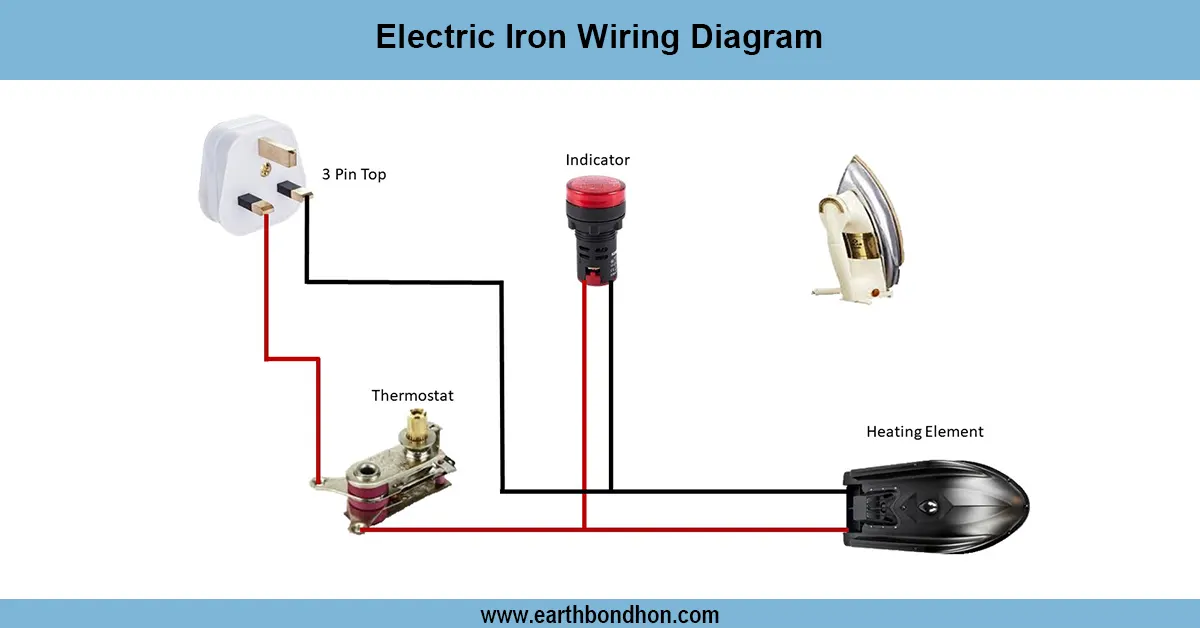
thermostat connection electric iron
The power cord, heating element, thermostat, indicator lamp, and the safety fuse are connected by electric iron wiring. Any wiring with the correct wiring will result in control of temperature, safe operation, and avoidance of electrical hazards in household operations.
electric iron electrical diagram
An Electric iron wiring diagram is used to describe the inside connections of a standard AC iron. It contains a power cord, plug, heating element, thermostat, indicator lamp, and safety fuse. Thermostat. The live wire of the plug is connected to one end of the heating element. The other end of the wire is connected to the neutral of the heating element. The thermostat measures the temperature of the soleplate and turns the heating element ON/OFF to ensure that the desired temperature is achieved. Other irons have a lamp that indicates when the iron is hot, which is parallel to the heating component. In case of a short circuit, a fuse is fitted in series with the live wire. Correct installation of wires brings about safe heating, control of temperatures, as well as avoidance of electrical leakages. Testing entails inspection of continuity, the functioning of the thermostats, and their proper indicator functioning.
Work & Installation (Input → Output Summary)
- Power Cord brings AC supply to iron terminals.
- Live Wire passes through fuse and thermostat to the heating element.
- Neutral Wire connects directly to heating element.
- Thermostat monitors temperature; opens/closes heating circuit to maintain set temperature.
- Indicator Lamp shows heating status, connected parallel to heating element.
- Proper wiring ensures controlled heating, safe operation, and protection from short circuits.
Testing & Final Adjustments
- Inspect power cord, plug, and internal connections for insulation and tightness.
- Test continuity of heating element and thermostat with a multimeter.
- Turn ON iron; indicator lamp should glow and heating element warms gradually.
- Adjust thermostat; heating element should switch ON/OFF at set temperatures.
- Test the fuse by simulating a short circuit or using a fuse tester.
- Ensure no sparking, excessive heating, or unusual odors during operation.
- Confirm indicator lamp functions properly while heating.
- Repeat ON/OFF cycles to verify reliability.
- Inspect terminals for secure mounting and insulation.
- Record testing results for safety documentation.