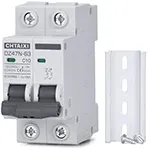
simple single phase House wiring circuit Diagram
Learn single phase line wiring installation in house with energy meter, DB, MCBs, switches, sockets, fans, and earthing for safe and efficient power supply.
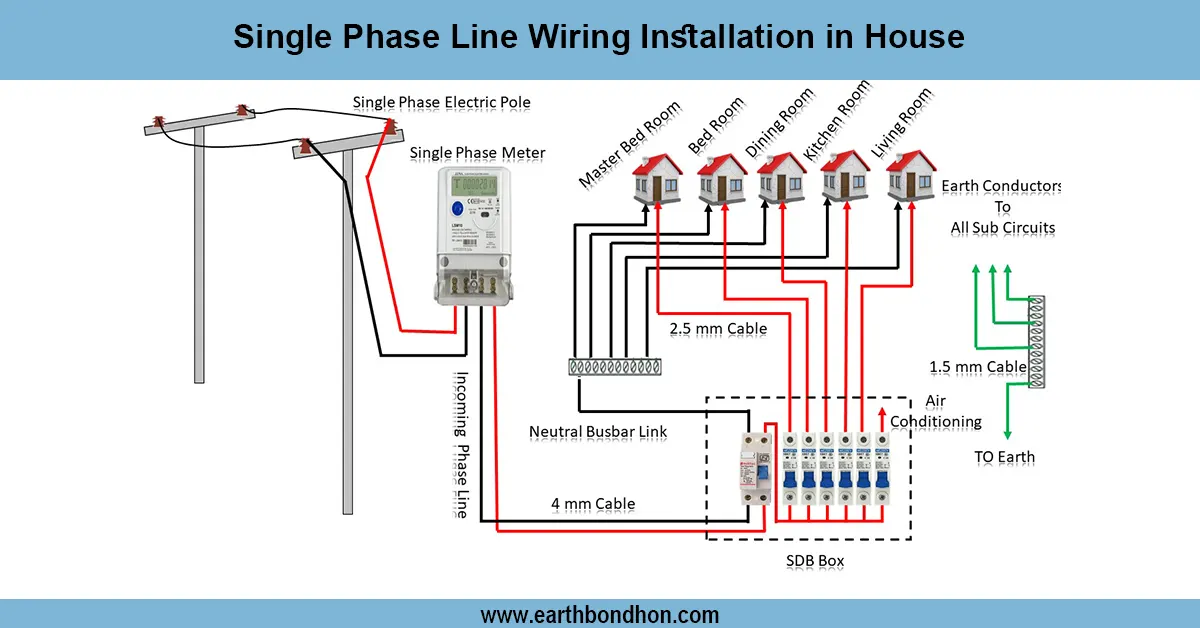
home electrical wiring layout
Installation of a single phase line wiring in a house carries electricity to appliances, switches and sockets with proper earthing and connected to the energy meter to the distribution board, MCBs.
phase neutral earth wiring diagram
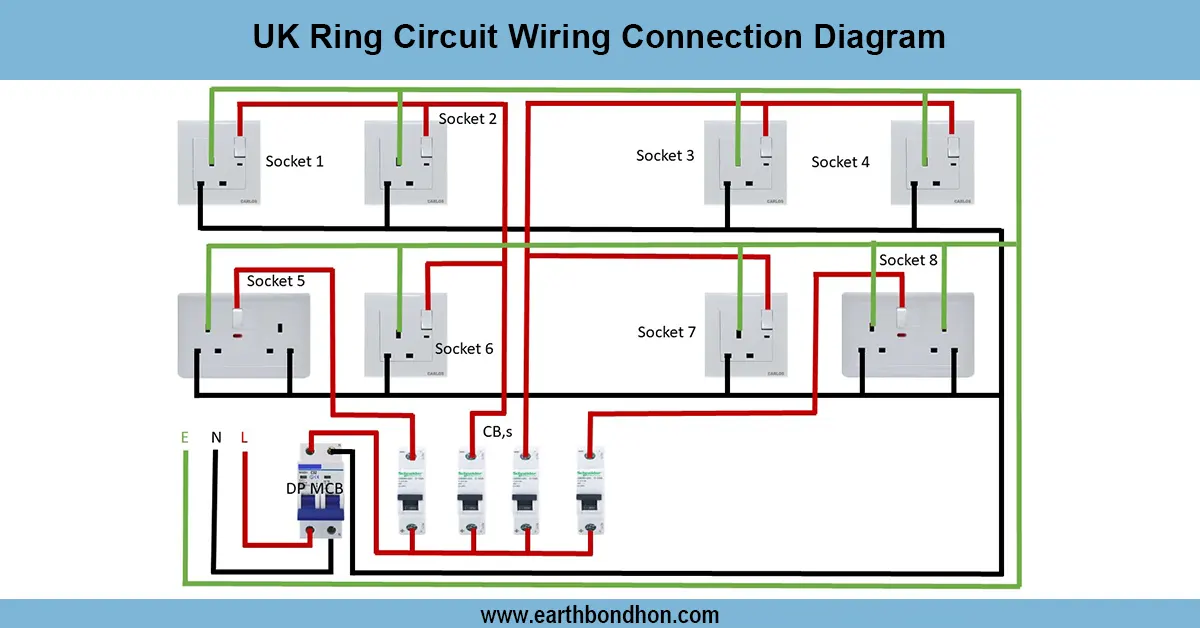
A house is fitted with a single-phase line wiring installation that distributes the power safely at the utility supply to various appliances. The system starts at the energy meter whereby the incoming phase and neutral line connections are realized. Thence the supply is distributed to the main MCB and then to the distribution board (DB). The DB separates the power into branch circuits of lights, fans, sockets and heavy appliances. Phase wires go through switches and protective units, and neutral connection goes back. All outlets and appliances are wired to earth to prevent the occurrence of electric shocks. Correct installation involves the choice of a suitable size of wire, use of conventional color codes (Phase: Red/Brown, Neutral: Blue/Black, Earth: Green/Yellow), and retention of all the connections. It is a safe, efficient and convenient wiring layout that is well planned.
Work & Installation Summary
- Connect utility supply to the energy meter.
- From the meter, route phase and neutral to the main MCB.
- Install a distribution board (DB) with branch MCBs.
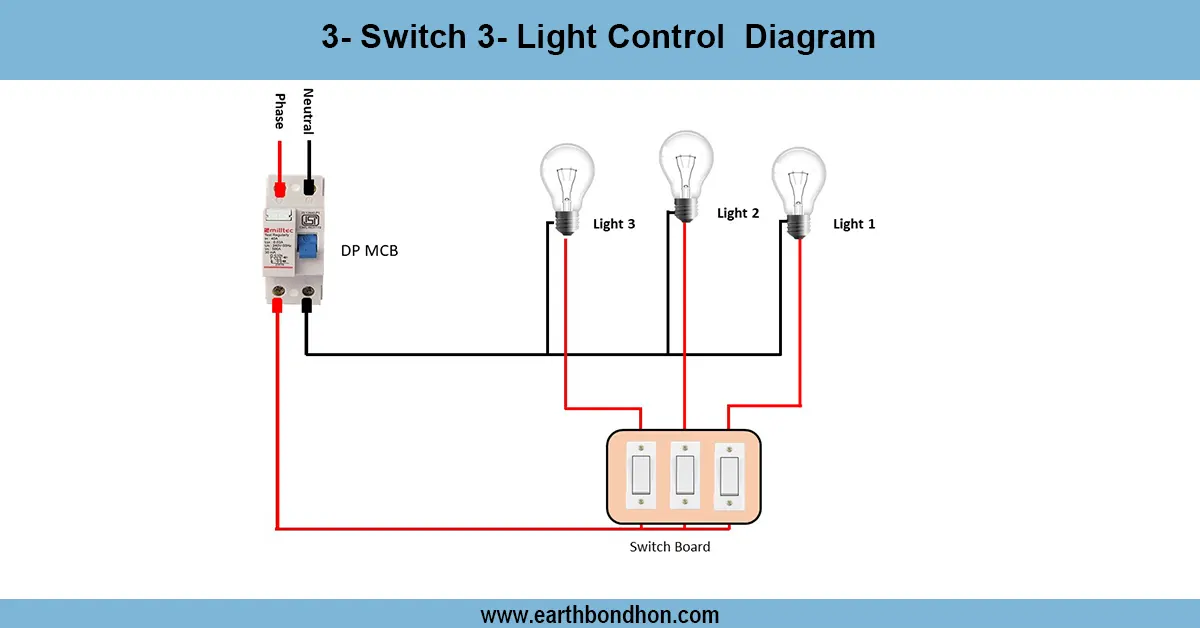
- Connect lights, fans, and sockets via separate circuits.
- Use proper wire sizes based on load demand.
- Ensure earthing at all outlets and appliances.
- Pass phase wires through switches, neutral directly to load.
- Use PVC conduits or casing for neat and safe routing.
- Follow color coding for easy identification.
- Label all circuits in DB for future maintenance.
Testing & Final Adjustments
- Check phase, neutral, and earth continuity.
- Test each switch, socket, and light point.
- Verify voltage at outlets and appliances.
- Confirm earthing effectiveness using a tester.
- Ensure MCBs trip correctly under fault or overload.
- Inspect wires for tight connections and insulation.
- Conduct a load test to check stability.
- Verify DB circuit labeling matches connections.
- Check that no circuit is overloaded.
- Record wiring details for troubleshooting and upgrades.